Toledo Homeowner Hiring Guide
Hire a Tree Trimming Company Like a Pro
Choosing a tree trimming contractor is about more than finding the lowest estimate. The company should understand proper pruning, carry appropriate insurance, use equipment suited to the property, protect nearby structures, and explain what will happen to limbs and debris when the work is finished.
This guide explains what Toledo-area homeowners should look for before hiring someone to trim branches near a roof, driveway, sidewalk, garage, utility area, neighboring property, or commercial building.
Looking for professional tree trimming service now? Visit Joey Tree’s tree trimming and pruning page or call 419-329-8900 for a free estimate.
Ask About Insurance and Experience
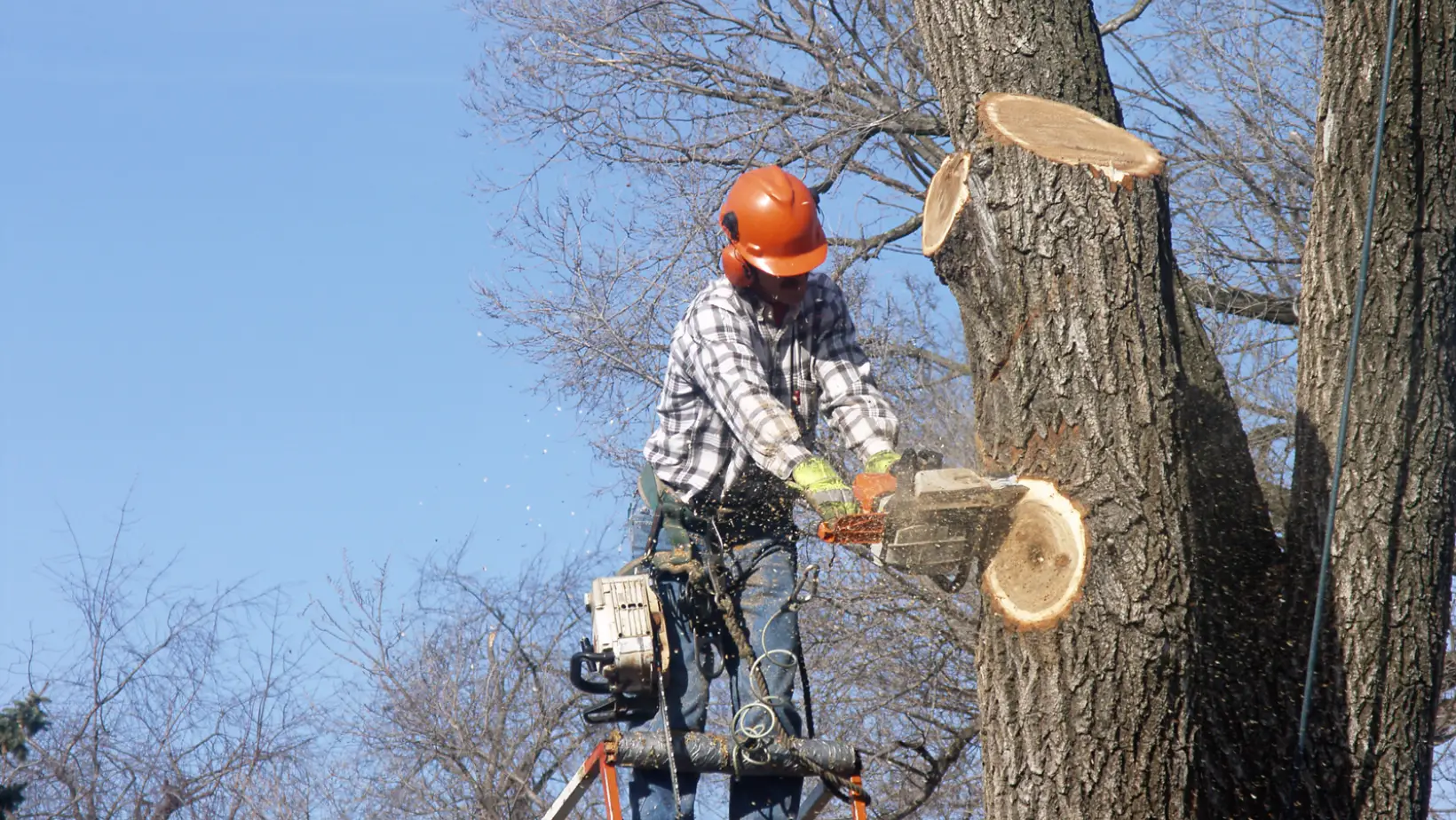
A tree trimming company should be able to explain its experience, insurance coverage, crew qualifications, and approach to protecting the property. Tree work near homes, garages, driveways, fences, and utility areas carries real risk, so homeowners should not be afraid to ask direct questions.
Ask whether the contractor carries liability insurance for professional tree work and whether workers on the property are appropriately covered. A reputable company should be willing to provide current documentation rather than simply saying it is insured.
Useful questions include:
- How long have you performed professional tree work?
- Can you provide proof of current insurance?
- Who will supervise the work?
- Does the crew have experience with trees near buildings and utilities?
- Have you handled similar trees or access conditions before?
Look for Proper Pruning Practices
Good pruning should solve a specific problem. That may include removing deadwood, improving clearance, reducing excessive weight, correcting weak branch structure, or removing storm-damaged limbs. The contractor should be able to explain why each major cut is recommended.
Be cautious when the explanation is limited to making the tree smaller or cutting back everything evenly. Proper trimming should account for the tree’s species, age, condition, branch structure, surrounding property, and the reason the work is being performed.
A good contractor should be able to point to a limb and explain: what is wrong with it, what type of cut is proposed, how that cut addresses the problem, and what the tree should look like when the work is complete.
Avoid Contractors Who Recommend Tree Topping
Tree topping removes large portions of the canopy without regard for proper pruning structure. It can create weak regrowth, large wounds, stress, decay, and future hazards. Be cautious when a contractor recommends cutting the entire top off a healthy tree simply to make it shorter.
A qualified contractor should discuss targeted pruning, crown reduction, clearance work, deadwood removal, or another specific approach instead of making severe indiscriminate cuts.

Ask What Equipment Will Be Used
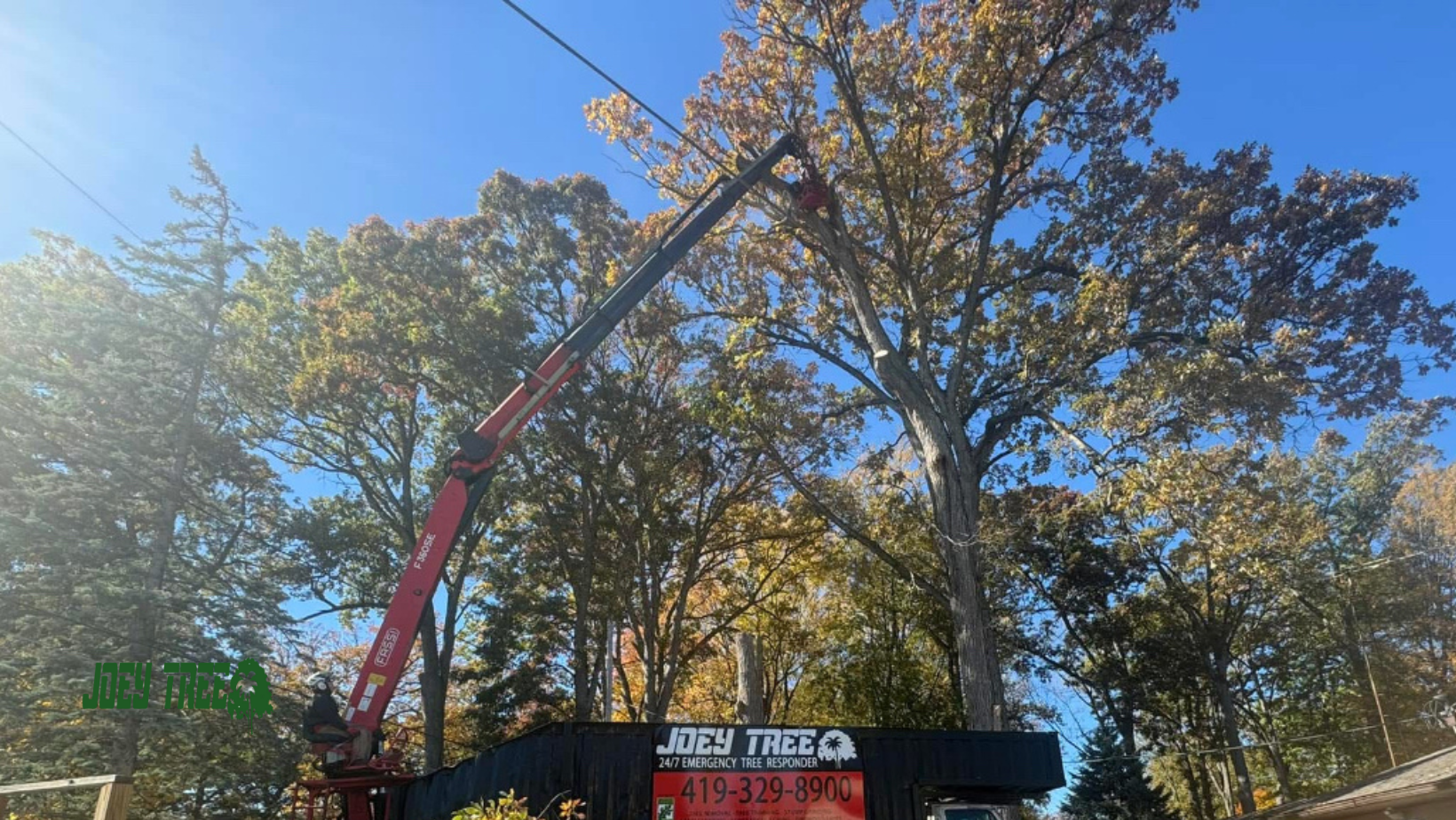
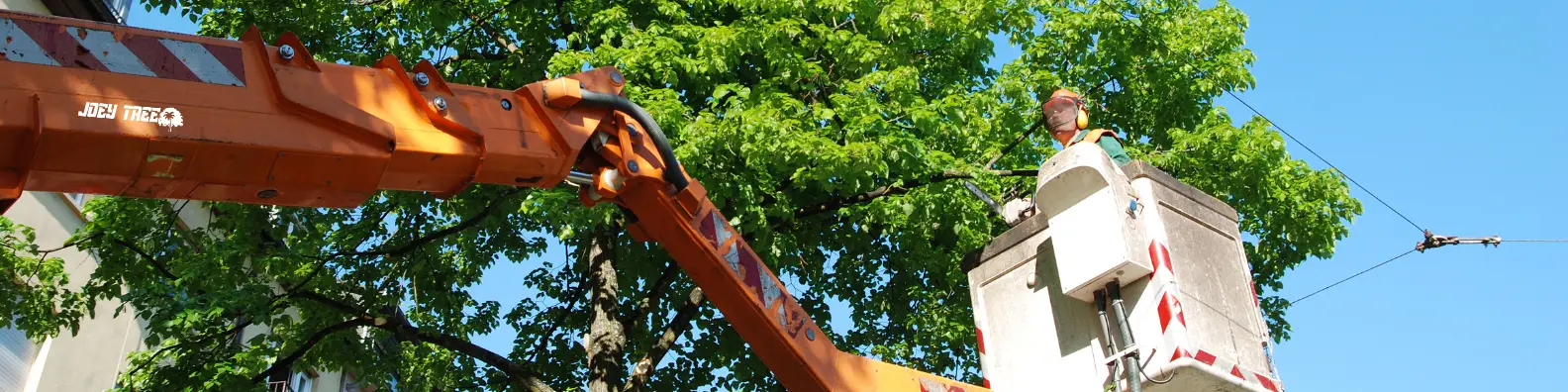
The right equipment depends on the tree, access, nearby structures, ground conditions, and the size of the limbs. Ask whether the project requires a bucket truck, crane, grapple saw, climbing equipment, controlled rigging, or ground-protection measures.
Equipment should match the job. A large limb over a roof may need to be rigged and lowered in sections. A tree behind a fence may require climbing or compact-access equipment. A crew working from a driveway may need to explain how pavement, lawn areas, landscaping, or nearby structures will be protected.
Utility warning: If branches are touching or tangled with energized utility lines, the contractor should explain when utility coordination is required. Homeowners should stay away from damaged lines and contact the utility company or emergency services first.
Ask How the Property Will Be Protected
Tree trimming often happens around roofs, gutters, garages, fences, driveways, patios, sheds, vehicles, lawns, and established landscaping. Ask how branches will be controlled and how the crew plans to avoid unnecessary damage.
Depending on the project, the contractor may use ropes, rigging, mats, plywood, controlled drop zones, spotters, or smaller cuts. The important part is that the company has a plan and can explain it before work begins.
Confirm Cleanup and Debris Removal
Ask whether the estimate includes branch removal, chipping, log removal, raking, and final cleanup. A lower estimate may not be a better value if the homeowner is left with heavy limbs, logs, or debris.
The written scope should also explain whether wood will be hauled away, left in manageable lengths, chipped on site, or stacked in a designated area. Do not assume cleanup is included simply because the contractor plans to cut the branches.
Ask specifically: “When the crew leaves, what exactly will still be on my property?”
Get a Clear Written Estimate
The estimate should explain which trees or limbs are included, what work will be performed, whether debris removal is included, what equipment may be used, and whether stump grinding or additional work is separate.
- The address and area where work will be performed
- The trees, limbs, or sections included
- The type and purpose of the pruning
- Any access or equipment requirements
- How the roof, lawn, driveway, fence, or landscaping will be protected
- Whether chipping, hauling, and cleanup are included
- Whether logs or wood will remain on the property
- Whether additional work requires approval before proceeding
- The total estimated price and payment terms
Compare the Scope, Not Just the Bottom-Line Price
Two estimates may appear to cover the same tree while describing very different work. One contractor may include deadwood removal, controlled rigging, hauling, chipping, and cleanup. Another may only include cutting a few visible limbs and leaving the debris behind.
Compare what will actually be done, which risks are being addressed, how the property will be protected, and what condition the site will be in afterward. The clearest estimate is often more useful than the shortest or cheapest one.
Questions to Ask a Toledo Tree Trimming Contractor
Use this checklist when requesting estimates or speaking with a contractor at your property.
- Are you insured for professional tree work?
- What branches or sections are you recommending that we remove?
- Why is the pruning needed?
- Will the work involve topping?
- What equipment will you use?
- How will you protect the roof, driveway, lawn, fence, or landscaping?
- Is cleanup and debris removal included?
- What happens if the tree is more damaged than it appears?
- Would trimming solve the problem, or is removal safer?
Warning Signs Before You Hire
No written scope: The contractor gives only a verbal price and does not identify which limbs or services are included.
Pressure to decide immediately: You are pushed to approve the work before you understand the recommendation.
Topping is presented as routine maintenance: The contractor recommends removing most of the canopy without explaining healthier alternatives.
Insurance questions are avoided: The company will not provide documentation or gives vague answers about coverage.
Cleanup is unclear: The estimate does not explain what happens to limbs, brush, logs, and debris.
Consider Local Experience and Customer Reviews
A Toledo-area contractor should be familiar with mature neighborhood trees, tight driveways, older homes, storm exposure, common local species, and the access challenges found throughout Northwest Ohio.
Read recent reviews and look for comments about communication, arrival times, care around the property, cleanup, and whether the finished work matched the estimate. A long list of vague five-star reviews is less useful than specific feedback describing how the company handled a real project.
You can also review Joey Tree customer reviews before requesting an estimate.
Need a Tree Trimming Estimate in Toledo?
Joey Tree can inspect the tree, explain which limbs should be addressed, review access and equipment needs, and provide a clear estimate that explains the work and cleanup.
Hiring a Tree Trimming Contractor: FAQs
Should a tree trimming contractor provide proof of insurance?
Is the lowest tree trimming estimate usually the best choice?
How can I tell whether a contractor plans to top my tree?
Should cleanup be listed in the estimate?
What if the contractor discovers that the tree is unsafe to trim?