Toledo Tree Removal Estimate Guide
A tree removal estimate should tell you much more than the price. A useful quote should identify what tree work is being proposed, how the crew expects to complete it, what equipment may be needed, how the property will be protected, what happens to the wood and debris, and which services are included or excluded.
That matters because two tree removal estimates can look similar at the bottom of the page while describing very different jobs. One may include hauling, cleanup, stump grinding, and specialized equipment. Another may include only cutting the tree down and leaving logs or debris on the property.
This Toledo homeowner’s checklist explains what should happen during an estimate, what to look for in the written scope, and how to compare two quotes before deciding which company to hire. If you are mainly researching price ranges, see our guide to tree removal cost in Toledo.
Ready to have your tree looked at?
What Does the Estimator Look at on Your Property?
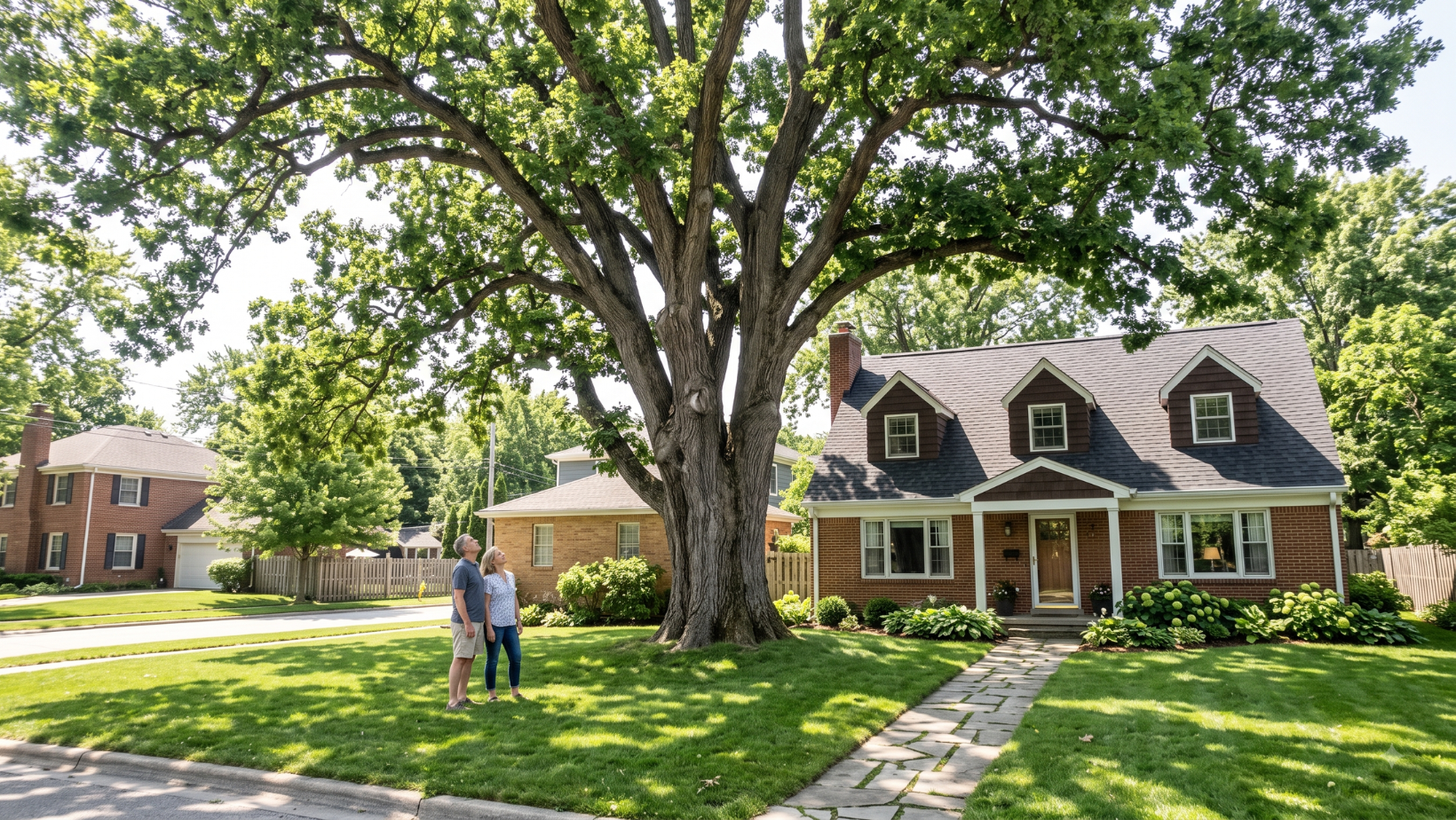
A tree removal estimate usually starts with the tree itself, but the estimator should also look at the area around it. The same tree can require a very different removal plan depending on whether it stands in an open front yard or behind a house surrounded by fencing, landscaping, utilities, garages, patios, or neighboring property.
Important conditions to examine include:
- Overall tree height and trunk diameter
- Dead, cracked, hollow, declining, or storm-damaged wood
- Direction of lean and weight distribution
- Large limbs over roofs, garages, driveways, or other structures
- Available drop zones and working space
- Access for trucks, lifts, cranes, chippers, and other equipment
- Fences, gates, landscaping, patios, sidewalks, and neighboring property
- Overhead and underground utilities
- The amount of wood, brush, and debris the project will generate
The Estimate Should Identify Exactly What Is Being Removed
This sounds obvious, but it becomes important when a property has several trees. A written estimate should make it clear which tree or trees are included and what is supposed to happen to each one.
Instead of a vague description such as “remove trees in backyard,” a better scope identifies the number of trees, their general location, and the work being proposed. Photos, markings, or notes can also help prevent confusion when multiple trees are close together.
How Will the Tree Actually Be Removed?
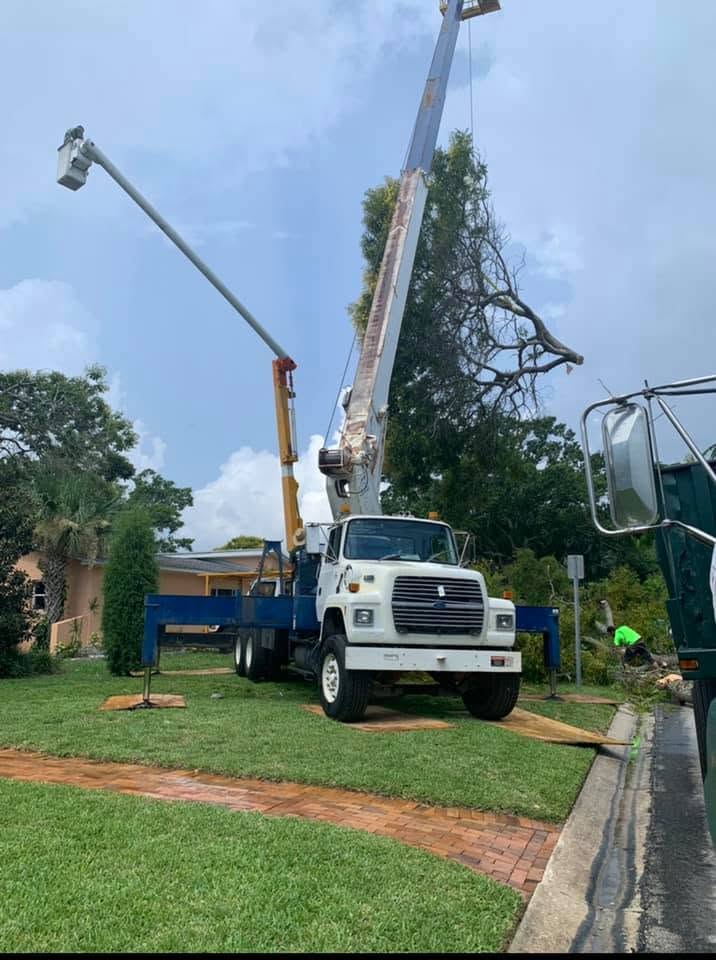
The estimator should have a general plan for how the tree can be removed safely. Some trees can be dismantled with standard climbing and rigging techniques. Others may require an aerial lift, bucket truck, crane, grapple saw, or a combination of equipment.
When large limbs or trunk sections are positioned over a house, fence, garage, driveway, or other obstacle, the crew may need to cut the tree into controlled sections rather than allowing pieces to fall freely.
You do not need to understand every technical detail, but the company should be able to explain the basic removal approach and why certain equipment is appropriate for the property.
Access Can Change the Entire Estimate
Access is one of the easiest differences to overlook when comparing tree removal prices. Equipment that can reach a tree directly from a driveway or street may make a job very different from one requiring crews to work through a narrow gate or carry material out of a fenced backyard.
During the estimate, point out anything that may affect access:
- Gate widths and fenced areas
- Narrow or shared driveways
- Septic systems or drainage areas
- Soft or recently saturated lawns
- Retaining walls or steep grades
- Patios, pools, sheds, and play equipment
- Neighboring property that cannot be accessed
- Vehicles or trailers that must be moved before work begins
How Will the Lawn, Driveway, Fence, and Landscaping Be Protected?
The estimate is also a good time to discuss parts of the property you are concerned about. If large equipment must cross the lawn, ask whether ground-protection mats may be used. If limbs extend over a fence, roof, garden, or patio, ask how those areas will be protected while sections are lowered or moved.
No tree company can promise that heavy tree work will leave every blade of grass untouched, but the estimator should recognize obvious property concerns and explain how the crew intends to manage them.
Real Toledo Project
Why the Site Visit Matters
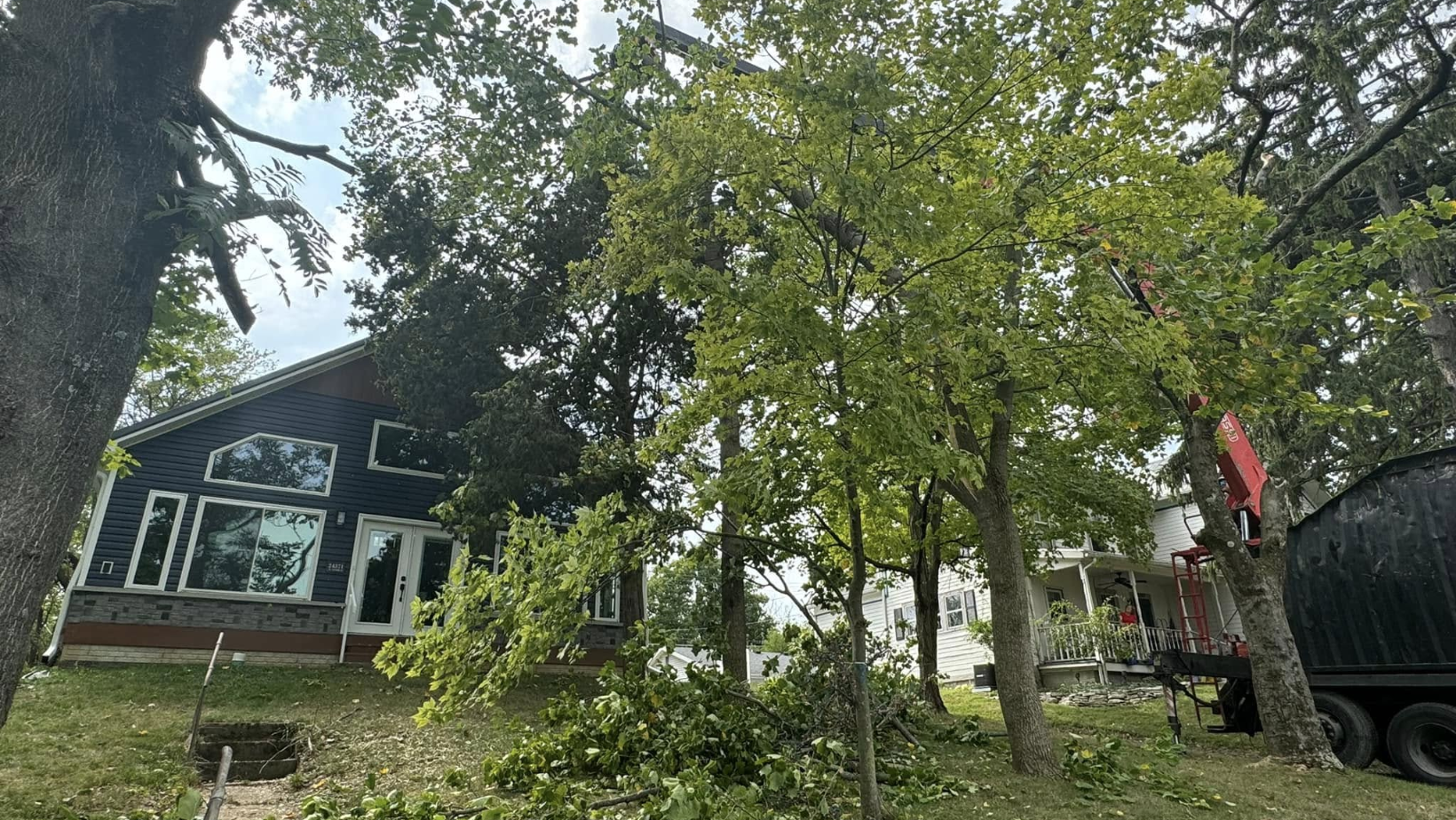
On this South Toledo project, Joey Tree was removing several large dead trees from an established residential property. Homes, driveways, landscaping, neighboring property, and limited working space all affected the removal plan. The size of the trees also created a substantial amount of heavy wood. Those are exactly the kinds of conditions that are difficult to understand from a phone description alone and are important to evaluate when preparing an accurate tree removal estimate.
What Happens to the Limbs, Brush, and Logs?
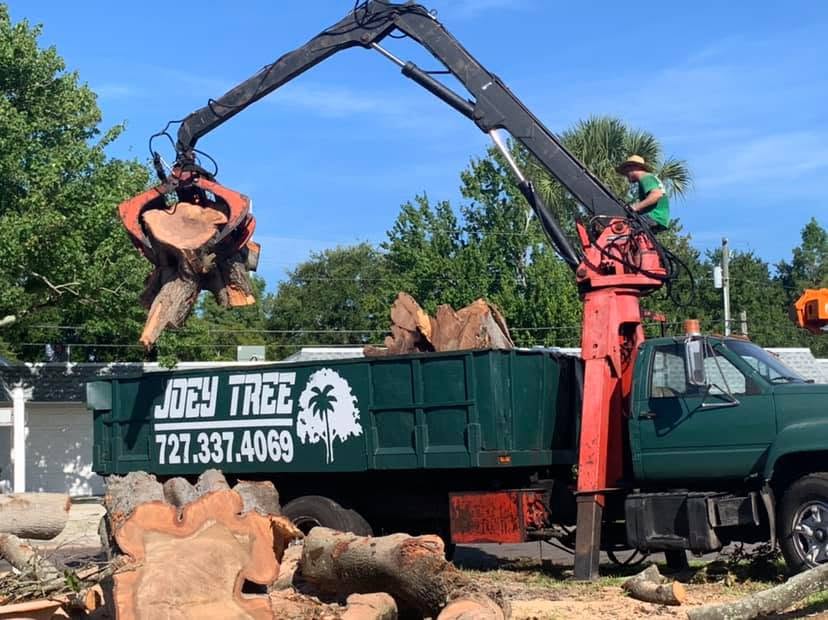
Never assume that debris removal is included simply because the tree itself is being removed. Ask exactly what will happen to the material after it reaches the ground.
The written estimate should make clear whether:
- Branches will be chipped and hauled away
- Large logs will be removed
- Wood will be left for the homeowner
- Logs will be cut into specific lengths
- Wood chips will be removed or left on-site
- Additional hauling charges apply
This is one reason comparing only the final price can be misleading. A quote that leaves several tons of logs on the property is not necessarily equivalent to one that includes complete hauling and disposal.
Is Stump Grinding Included?
Tree removal and stump grinding are separate parts of a project, so stump work should be specifically addressed in the quote. Do not assume that “remove tree” automatically means the stump disappears too.
If stump grinding is included, ask how deeply the stump will be ground, what happens to the grindings, and whether exposed surface roots or unusually large root flares are part of the quoted work.
If the quote does not include it, ask for a separate price so you can compare the true total cost. Learn more about Joey Tree’s stump grinding service.
What Does “Cleanup” Actually Mean?
Cleanup can mean different things to different companies. Ask what the property should look like when the crew leaves.
Questions worth asking include:
- Will small branches and twigs be collected?
- Will the work area be raked?
- Are sawdust and wood chips removed?
- Are stump grindings hauled away or left in the hole?
- Is topsoil, grass seed, or final lawn restoration included?
- Will temporary fencing or other moved items be put back?
If final grading, topsoil, seed, or landscape restoration matters to you, have it written into the scope rather than assuming it is part of standard cleanup.
Ask About Scheduling and How Long the Work May Take
The estimate should give you some idea of scheduling, even if weather and emergency work make an exact date impossible to guarantee far in advance.
Ask approximately when the project could be scheduled, whether the work is expected to take a few hours or multiple days, and whether vehicles, gates, outdoor furniture, or other items need to be moved before the crew arrives.
Who Handles Utilities, Street Trees, and Permits?
Certain properties require additional coordination. If a tree is within a Toledo public right-of-way or is considered a street tree, city rules may apply before it can be pruned or removed.
If the project includes stump grinding, root removal, excavation, or other ground disturbance, underground utilities also need to be considered. Ask who will coordinate any required utility locating or municipal approval before work begins.
These issues do not affect every private-property tree removal, but when they do apply, the estimate should make clear who is responsible for addressing them.
Ask About Insurance Before Accepting the Estimate
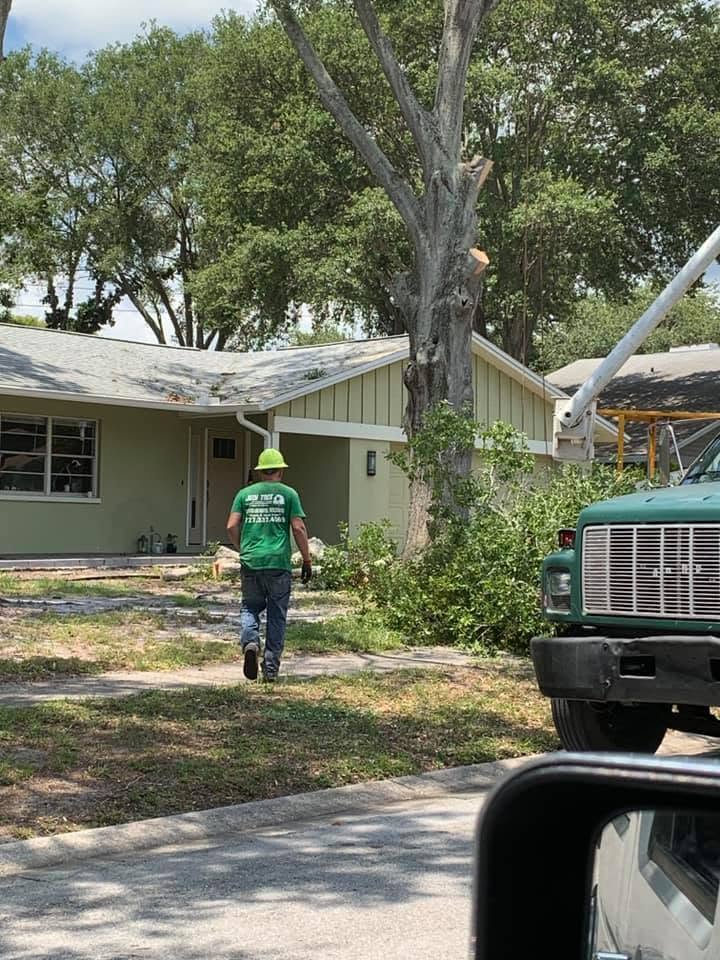
An estimate is also an opportunity to verify who you are hiring. Ask the company for current proof of insurance and make sure the company name on the documentation matches the business you are hiring.
If you are comparing companies as well as prices, read our guide to choosing a tree removal contractor and see what local customers say in our Joey Tree customer reviews.
How to Compare Two Tree Removal Estimates
Put the quotes side by side and compare the scope before comparing the total.
Tree Removal Estimate Checklist
- Are the same trees included?
- Are both companies removing the same amount of material?
- Is the removal method explained?
- Is specialized equipment included when needed?
- Is property protection addressed?
- Are limbs and brush chipped and removed?
- Are large logs hauled away?
- Is stump grinding included?
- What cleanup is included?
- Are there additional hauling or disposal charges?
- Who handles permits or utility coordination if needed?
- Can the company provide proof of insurance?
- What is the expected scheduling window?
- What is specifically excluded from the quote?
Red Flags in a Tree Removal Estimate
A low price is not automatically a problem, but be cautious when the quote is so vague that you cannot tell what you are buying. Warning signs can include:
- No clear description of which tree is being removed
- No explanation of whether cleanup or hauling is included
- No mention of stump grinding one way or the other
- A major access problem that was never discussed
- No discussion of nearby roofs, fencing, landscaping, or other obvious obstacles
- Refusal or hesitation when asked for proof of insurance
- A verbal-only price for a complicated project with no written scope
- Pressure to approve the work before your questions are answered
A Good Estimate Should Leave You With Fewer Questions
The goal of a tree removal estimate is not simply to put a number on the job. It should give you a clear picture of what the company intends to do, how the work will be approached, what happens to the tree afterward, and what the property should look like when the crew leaves.
If you already know you need removal and are ready to talk about the work itself, visit our professional tree removal page.
Request a Free Tree Removal Estimate
Joey Tree can visit the property, evaluate the tree and access, discuss your options, and provide a clear estimate for the work.