Ohio Neighbor Tree & Insurance Guide
Who Pays When a Neighbor’s Tree Falls on Your Property in Ohio?
The tree may have started in your neighbor’s yard, but that does not automatically mean your neighbor receives the bill.
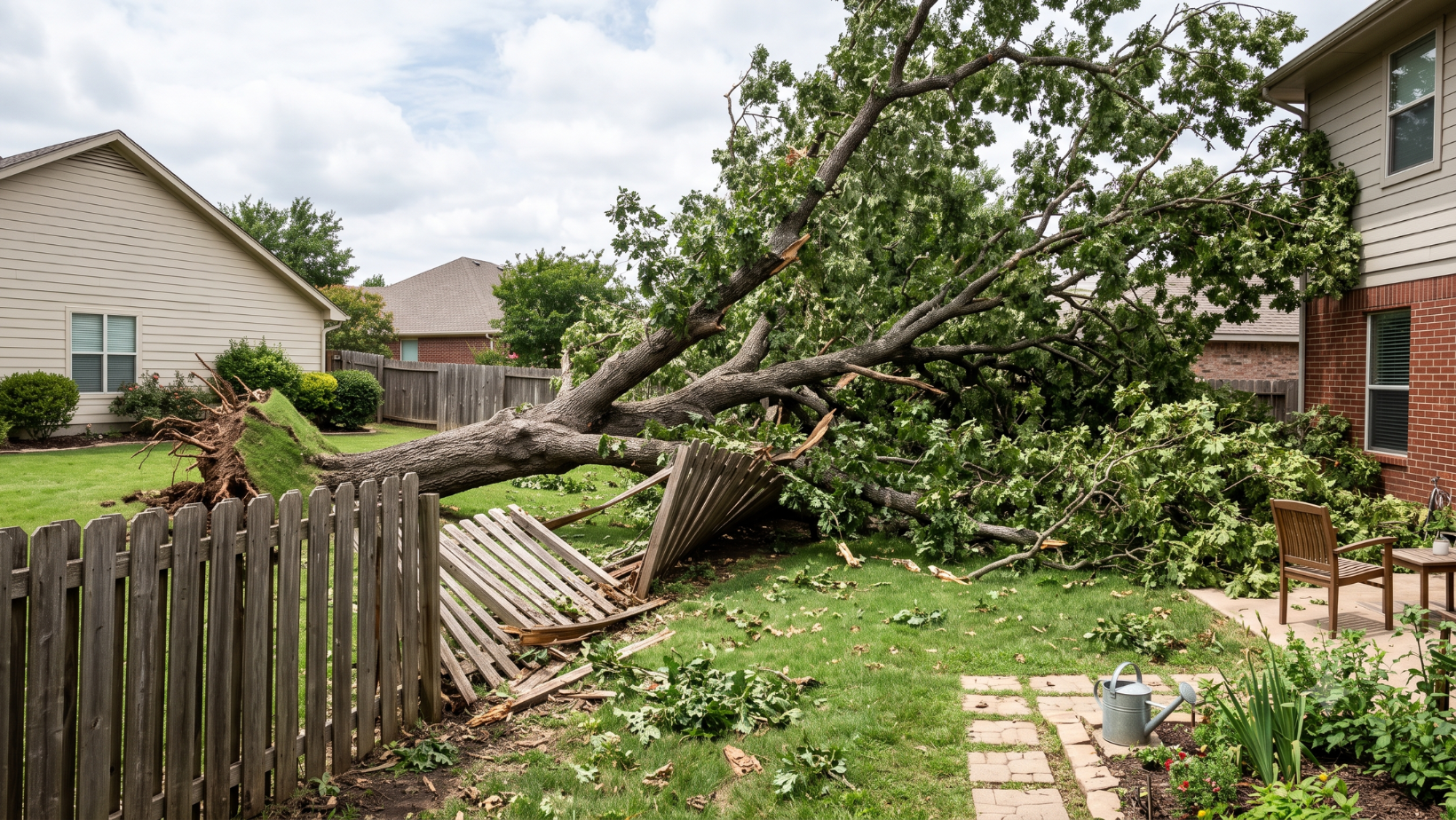
A strong wind moves through Northwest Ohio, you hear a crack, and suddenly part of your neighbor’s tree is lying across your fence, driveway, garage, or roof. Once everyone is safe, the questions arrive quickly: Who pays for the damage? Who removes the tree? Should you call your neighbor, your insurance company, or a tree service first?
In many cases, the homeowner whose property was damaged starts by contacting their own insurance company. The answer can change, however, when there is evidence that the tree owner knew, or reasonably should have known, that the tree was dead, defective, or likely to fall.
The Quick Answer
If a neighbor’s apparently healthy tree falls during a storm and damages your property, you will generally begin with your own homeowners insurance company. Your neighbor is not automatically responsible simply because the tree grew on their land. If the neighbor had actual or constructive notice that the tree presented an obvious danger and failed to act, negligence, and ultimately financial responsibility, may become an issue. Insurance terms, deductibles, evidence, and the specific facts all matter.
Important: This article provides general educational information and is not legal or insurance advice. Ohio tree disputes and insurance claims depend on the facts, policy language, property ownership, prior notice, and available evidence. Contact your insurance carrier and an Ohio attorney for advice about your specific situation.
Start With Safety, Not Blame
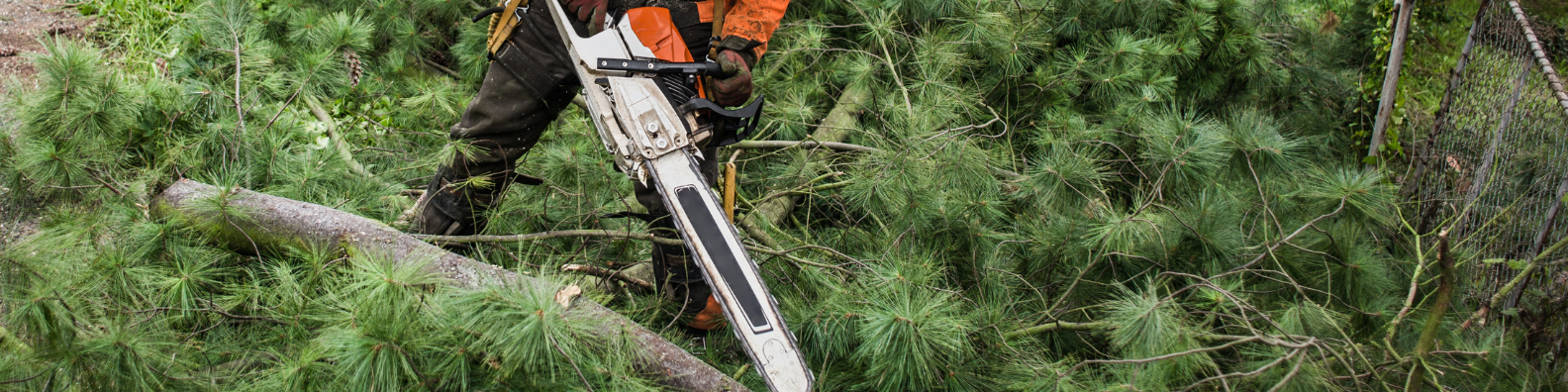
It is natural to look across the property line and think, “That was their tree.” But the first few minutes after a tree falls are not the time to argue about responsibility. Storm-damaged trees can shift, roll, split further, or release limbs that are under tension.
Keep people, pets, and vehicles away if:
- The tree is resting on a roof, garage, fence, vehicle, or another tree
- Large limbs are hanging or partially attached
- The trunk is split or under pressure
- The tree has blocked a driveway, sidewalk, door, or access route
- Utility lines, service wires, poles, or electrical equipment may be involved
- The roof, porch, shed, or garage appears structurally damaged
Do not climb on the tree, pull branches with a vehicle, cut limbs under tension, or stand beneath the canopy to take photographs. A fallen tree is not always finished moving.
Who Should You Call First?
The right first call depends on what the tree hit and whether an active hazard remains.
1
Call 911 for downed power lines
If a line is down, low, tangled in the tree, or touching a vehicle or fence, stay away and call 911. Treat every wire as energized until the utility confirms otherwise.
2
Contact your insurance company
Report damage to your home, garage, fence, shed, belongings, or other covered property. Ask what photographs, estimates, emergency repairs, and inspections the carrier requires.
3
Call a professional tree service
Once electrical and immediate safety concerns are addressed, a tree crew can evaluate the weight, pressure, access, equipment needs, and safest removal sequence.
Does Your Homeowners Insurance Cover the Damage?
When a neighbor’s tree damages your home or another insured structure, the practical first step is normally to file a claim with your own homeowners insurer. Your carrier can evaluate the damage, your deductible, debris-removal provisions, and whether temporary repairs are covered.
Coverage depends on your policy. A policy may respond differently depending on whether the tree:
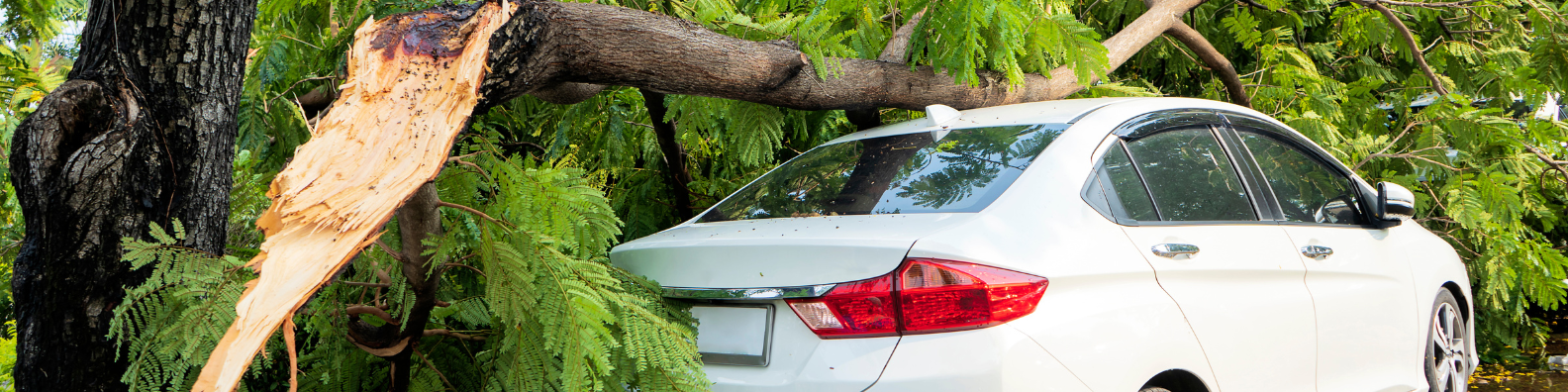
- Damaged the house, garage, shed, fence, or another insured structure
- Blocked the driveway or necessary access to the home
- Damaged personal property inside a structure
- Fell harmlessly in the yard without striking covered property
- Was removed only as a preventive measure before it fell
If the tree simply falls in an open part of the yard without damaging covered property or blocking necessary access, debris removal may not be covered. The policy wording and insurer’s decision control, so do not rely on a general internet rule as a substitute for calling your carrier.
Read our more detailed guide to tree removal insurance coverage.
What If the Neighbor Knew the Tree Was Dead or Dangerous?
This is where the analysis can change. Ohio tree-fall negligence cases focus heavily on whether the tree owner had actual or constructive notice of a patent danger that the tree might fall.
Actual notice
The owner was directly told about the danger or otherwise knew about it. Examples could include a written warning, previous complaints, an arborist’s recommendation, prior limb failures, or the owner’s own acknowledgment.
Constructive notice
The condition was open or apparent enough that a reasonable property owner should have recognized the danger, even if no one delivered a formal warning.
Evidence of a known hazard could include a clearly dead canopy, a severe lean toward a structure, a large visible crack, repeated falling limbs, extensive missing bark, a hollow or decayed trunk, heaving roots, or previous written warnings.
None of those facts automatically proves negligence. The condition must be evaluated in context, and disputes over notice, ownership, causation, damages, and responsibility may ultimately require the insurer, an attorney, or a court to resolve them.
If you are concerned about a neighbor’s tree before it falls, review our guide to Ohio rules for overhanging tree branches.
Who Pays to Remove the Fallen Tree and Debris?
There is no single answer that applies to every fallen tree. These are the most common starting points:
The tree damaged your home
Contact your homeowners insurer. Covered structural damage and reasonable debris removal may be addressed under your policy, subject to deductibles, limits, and exclusions.
The tree landed only in your yard
Cleanup may be your responsibility unless your policy provides applicable debris-removal coverage or another party’s legal responsibility is established.
The tree lies across both properties
The neighbors and their insurers may need to coordinate access, removal, and payment. Get permission before a contractor enters the neighboring property.
The neighbor may have been negligent
Your insurer may investigate whether another party is legally responsible and whether recovery should be pursued. Preserve prior warnings and evidence of the tree’s condition.
What If the Tree Damaged a Fence, Garage, Roof, or Vehicle?
Home or roof
Contact your homeowners insurer and ask about covered repairs, emergency tarping, temporary stabilization, personal-property damage, and debris removal.
Garage, shed, or fence
These may fall under other-structures coverage, but limits, deductibles, exclusions, and policy definitions vary.
Vehicle
Falling-tree damage to a vehicle is generally handled through optional comprehensive auto coverage rather than the homeowners policy. Contact the auto insurer as well as the homeowners carrier when both types of property were damaged.
What Photos and Records Should You Keep?
Good documentation helps your insurer, tree company, contractor, and, if necessary, attorney understand what happened.
- Wide photographs showing where the tree originated and where it landed
- Close photographs of damage to the roof, fence, garage, siding, vehicle, or landscaping
- Photographs of the trunk, root plate, broken sections, visible cavities, decay, fungi, missing bark, or dead limbs
- Photographs showing the property line, when relevant
- Copies of prior emails, letters, text messages, or written warnings about the tree
- Prior tree-service or arborist reports
- Dates and notes from earlier conversations with the neighbor
- Tree-removal, roofing, fence, vehicle, and repair estimates
- Receipts for emergency work, tarps, temporary repairs, cleanup, and lodging
- The insurance claim number and adjuster’s contact information
Take photographs only from a safe location. Do not enter the neighbor’s yard without permission, climb onto a damaged roof, or stand beneath suspended limbs for a better angle.
Can You Remove the Tree Before the Insurance Inspection?
Contact the insurance company before cleanup when it is reasonably safe and practical to do so. Ask whether the carrier wants to inspect the tree, receive photographs, approve an estimate, or preserve any evidence.
Safety and preventing further damage still come first. A tree may need to be moved promptly if it is crushing a roof, blocking emergency access, threatening to shift, or exposing the home to additional rain and wind.
When removal cannot wait:
- Take thorough photographs and video first, if it is safe
- Save all estimates, contracts, invoices, and receipts
- Ask the tree company to document the tree’s condition and work performed
- Do only what is reasonably necessary to address the hazard and prevent further damage
- Keep damaged materials if the insurer asks you to preserve them and doing so is safe
The Ohio Department of Insurance recommends documenting damage and keeping receipts for necessary temporary repairs and emergency work.
What If Power Lines Are Involved?
Do not approach the tree. A downed or low-hanging line may be energized even when it is not sparking, smoking, or making noise. Trees, fences, vehicles, standing water, and the surrounding ground may also carry electricity.
FirstEnergy advises people to call 911 and stay at least 30 feet away from downed distribution lines. Do not cut, pull, drive over, or attempt to move the tree until utility crews confirm that the area is safe.
Should You Talk to the Neighbor?
Yes, when it can be done calmly and safely. A straightforward conversation can help identify the neighbor’s insurer, arrange access, determine whether anyone had already inspected the tree, and coordinate cleanup.
Avoid making accusations or agreeing to legal responsibility on the spot. The full condition of the tree, policy language, prior notice, property boundary, and cause of failure may not yet be known.
If the trunk or work area crosses the property line, get clear permission before a tree crew enters the neighboring property. Ohio law also prohibits recklessly cutting down or injuring a tree growing on someone else’s land, so do not remove standing portions of a neighbor’s tree without authorization.
How Joey Tree Can Help After a Neighbor’s Tree Falls
Joey Tree cannot determine legal liability or promise that an insurance company will cover the work. We can inspect the physical situation, explain the safest removal approach, document visible conditions, provide an estimate, and remove the fallen or hazardous tree once the area is safe.
Depending on the situation, our work may include:
- Removing a tree or limb from a roof, garage, fence, driveway, or yard
- Controlled removal of hanging or partially attached limbs
- Crane, grapple-saw, bucket-truck, or rigging work when needed
- Clearing blocked driveways and access routes
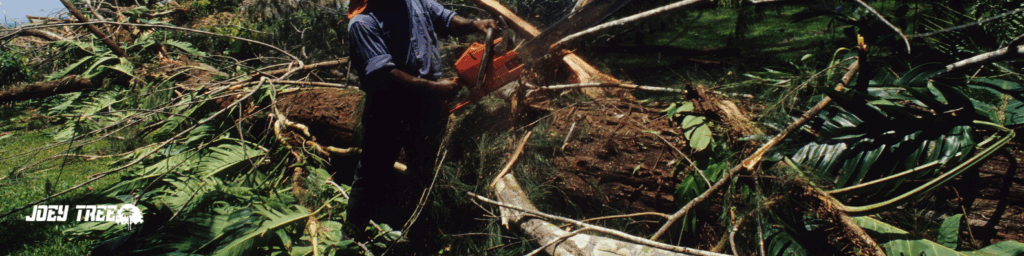
- Cutting and removing logs, limbs, and brush
- Providing photographs, job notes, and a clear estimate
- Grinding the stump when the remaining tree is also being removed
Learn more about emergency fallen-tree removal and professional tree removal.
Fallen-Tree Help in Northwest Ohio
Request Fallen-Tree Removal in Northwest Ohio
If a neighbor’s tree has fallen into your yard, damaged a structure, blocked access, or left hazardous limbs hanging, Joey Tree can inspect the situation and explain the safest next step.
Neighbor’s Fallen Tree FAQs
Is my neighbor automatically responsible because it was their tree?
Who pays if a healthy neighbor’s tree falls during a storm?
What if the tree fell in my yard but did not damage anything?
What if I warned the neighbor about the tree before it fell?
Can I cut up the portion that landed in my yard?
Can Joey Tree determine who is legally responsible?
What if the fallen tree is touching a power line?