Toledo Emergency Tree Removal Guide
What Changes the Price After a Storm?
Storm-damaged trees are stressful enough. The price should not feel like a mystery.
When a tree falls after a storm, cracks near the trunk, blocks a driveway, lands on a garage, or leaves large limbs hanging over a roof, most homeowners have two immediate questions: Is it safe? and what is emergency tree removal going to cost?
Emergency tree removal cost in Toledo depends on more than the size of the tree. Storm damage, access, nearby structures, power lines, unstable limbs, cleanup needs, and stump grinding can all change the final price. This guide explains what affects the cost, what to do first, and when to call for help.
Do you need immediate help instead of pricing information? Visit our emergency tree removal service page or call 419-329-8900.
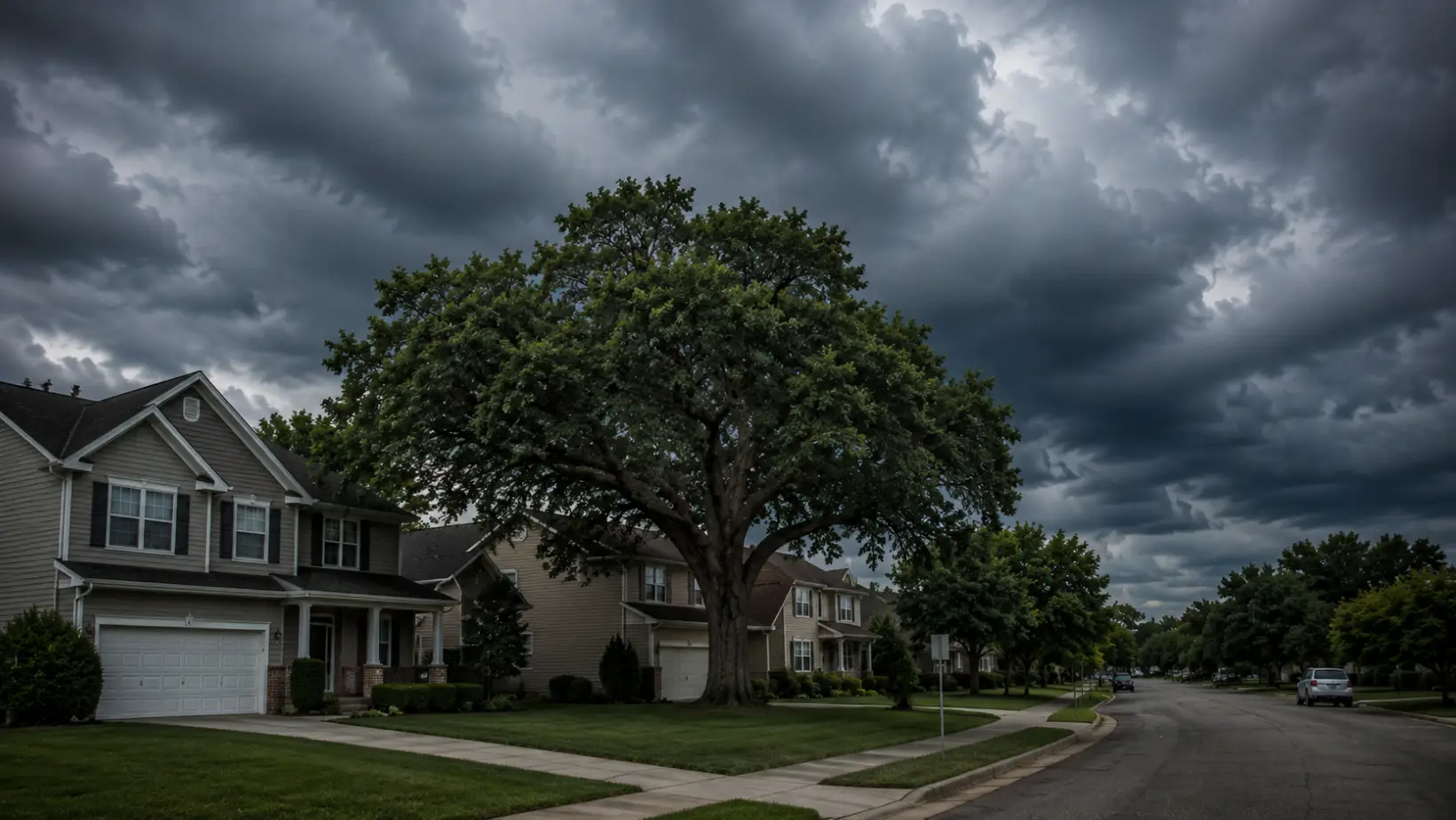
Quick answer: Emergency tree removal cost usually changes based on how dangerous the tree is, where it fell, how difficult it is to access, whether power lines or structures are involved, how much cleanup is needed, and whether stump grinding is part of the job. If the tree is unstable, leaning, cracked, or blocking access, call before trying to clean it up yourself.
Emergency Removal Cost vs. Standard Tree Removals
A routine tree removal is usually easier to plan. The crew can inspect the tree, schedule the right equipment, choose a safe removal path, and work under more predictable conditions. Emergency tree removal is different because the tree may already be broken, leaning, suspended, partially uprooted, or tangled with another structure.
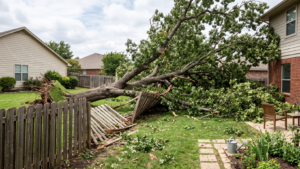
After a Toledo storm, a tree may be resting on a roof, leaning over a garage, blocking a driveway, crushing a fence, hanging over a sidewalk, or sitting in a tight backyard with very little room to work. That can increase the time, equipment, crew size, and safety planning needed to remove it correctly.
This is why two trees of the same size can have very different emergency removal costs. A tree lying in an open yard is one kind of job. A cracked tree leaning over a house near power lines is a completely different situation.
Storm Damage Cost Factors and Operational Risks
Emergency tree removal pricing is usually based on risk, complexity, equipment, and cleanup. Here are the most common things that can change the cost.
1. Tree condition and stability
Storm-damaged trees can shift while crews are working. A cracked trunk, split union, hanging limb, or partially uprooted root system may require slower, more controlled removal.
2. Proximity to properties and structures
A tree in an open yard is easier to remove than a tree resting on a roof, hanging over a garage, or wedged between a house and fence. Tight spaces often require controlled rigging, smaller cuts, and extra care.
3. Access limitations
Narrow driveways, backyard fences, landscaping, soft soil, slopes, and limited parking can affect how equipment gets to the tree. The harder it is to access the tree safely, the more planning the job may require.
4. Specialized heavy equipment requirements
Some emergency removals may require a bucket truck, crane, grapple saw, rigging system, loader, or additional equipment. Equipment needs depend on the size, location, and condition of the tree.
5. Thorough cleanup and material hauling
Removing the tree is only part of the job. Cutting, hauling, chipping, cleaning up storm debris, and leaving the property usable again can affect the final price.
6. Optional stump grinding
Stump grinding is usually a separate part of the project because it requires different equipment. Many homeowners add stump grinding after tree removal so the area is safer, cleaner, and easier to use.

Tree Condition and Storm Damage Layout Hazards
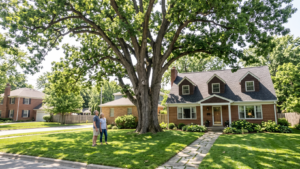
In Toledo and the surrounding Northwest Ohio area, emergency tree removal calls often happen after strong winds, heavy rain, saturated soil, ice, or sudden storm fronts. Mature trees in older neighborhoods can be especially vulnerable when roots, trunks, or large limbs have already started to decline.
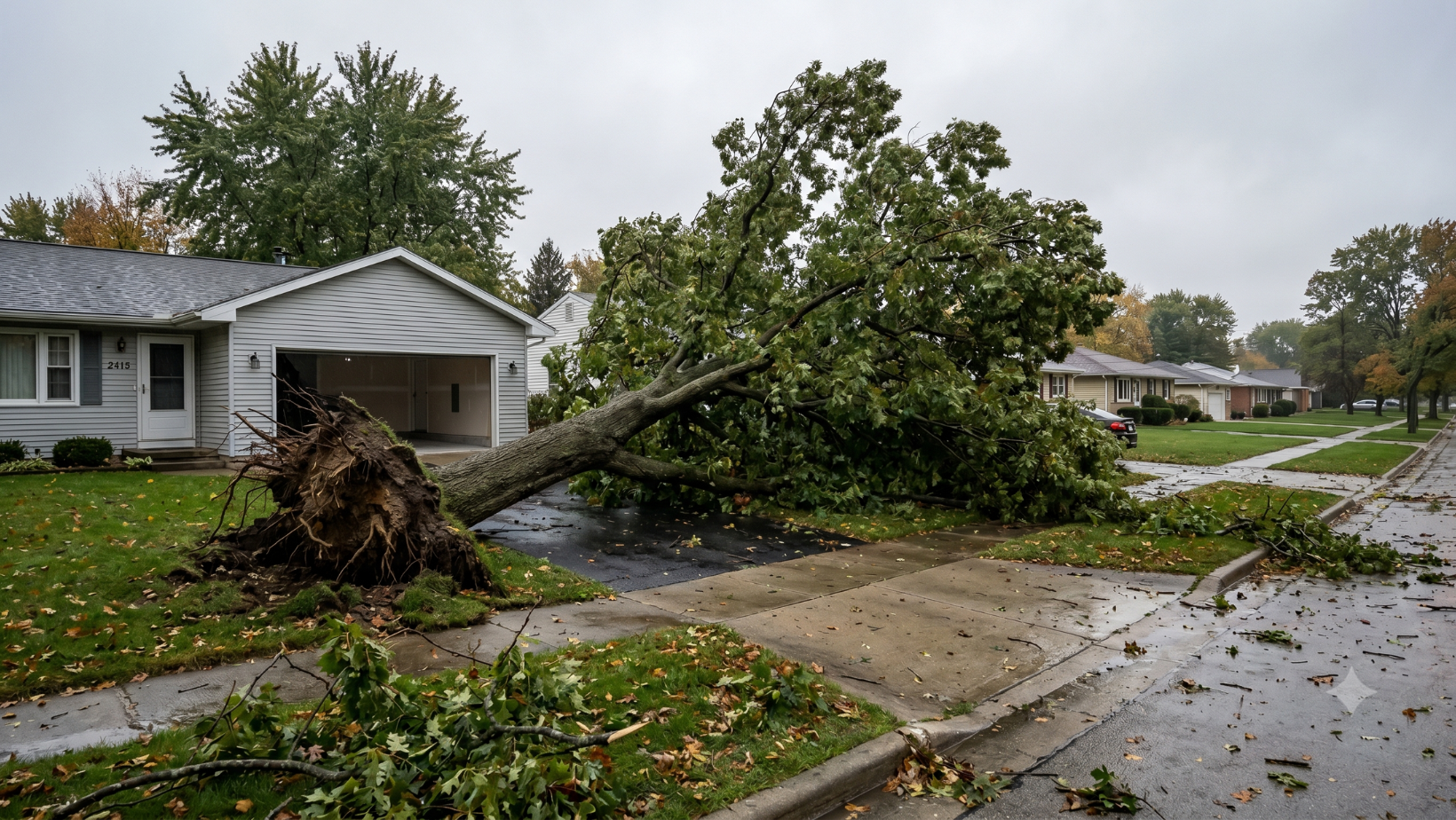
Fallen tree on a house or garage
This is one of the most urgent situations because the tree may be creating structural damage, roof leaks, or additional risk if it shifts.
Large limb hanging over a roof
A suspended limb can fall without warning. These jobs often require controlled removal so the limb does not damage the roof, gutters, siding, or driveway.
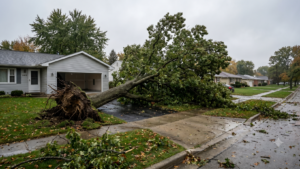
Driveway or access route blockage
When a tree blocks a driveway, entrance, or access route, homeowners often need faster service so vehicles, emergency access, and daily routines can return to normal.
Dangerous lean after severe weather
A new lean after heavy wind or saturated soil can be a warning sign of root movement. If the tree is leaning toward a structure, do not wait for it to get worse.
For urgent situations, Joey Tree provides emergency tree removal in Toledo and surrounding communities.
Equipment and Safety Controls in Action
Emergency tree work is not just about cutting up wood. The crew has to think about pressure, weight, nearby structures, equipment access, and what could shift once cutting begins.
Insurance Coverage and Damage Documentation
Sometimes, but it depends on your policy and what the tree damaged. If a tree hits an insured structure, your homeowners insurance may help with the cost to remove the tree, but coverage limits and deductibles can vary. If the tree falls in the yard and does not damage an insured structure, debris removal is often not covered, though some policies may make exceptions if access is blocked.
The safest approach is to document the situation before cleanup begins. Take photos from a safe distance, call your insurance company, and ask what they need before the tree is removed. Do not climb on a damaged roof, stand under hanging limbs, or touch anything near power lines just to get pictures.
Helpful note: If you are not sure what is covered, read our guide to tree removal insurance coverage and contact your insurance provider directly for policy-specific answers.
Third-party resource: Insurance Information Institute: If a Tree Falls on Your House.
Power Lines and Electrical Utility Hazards
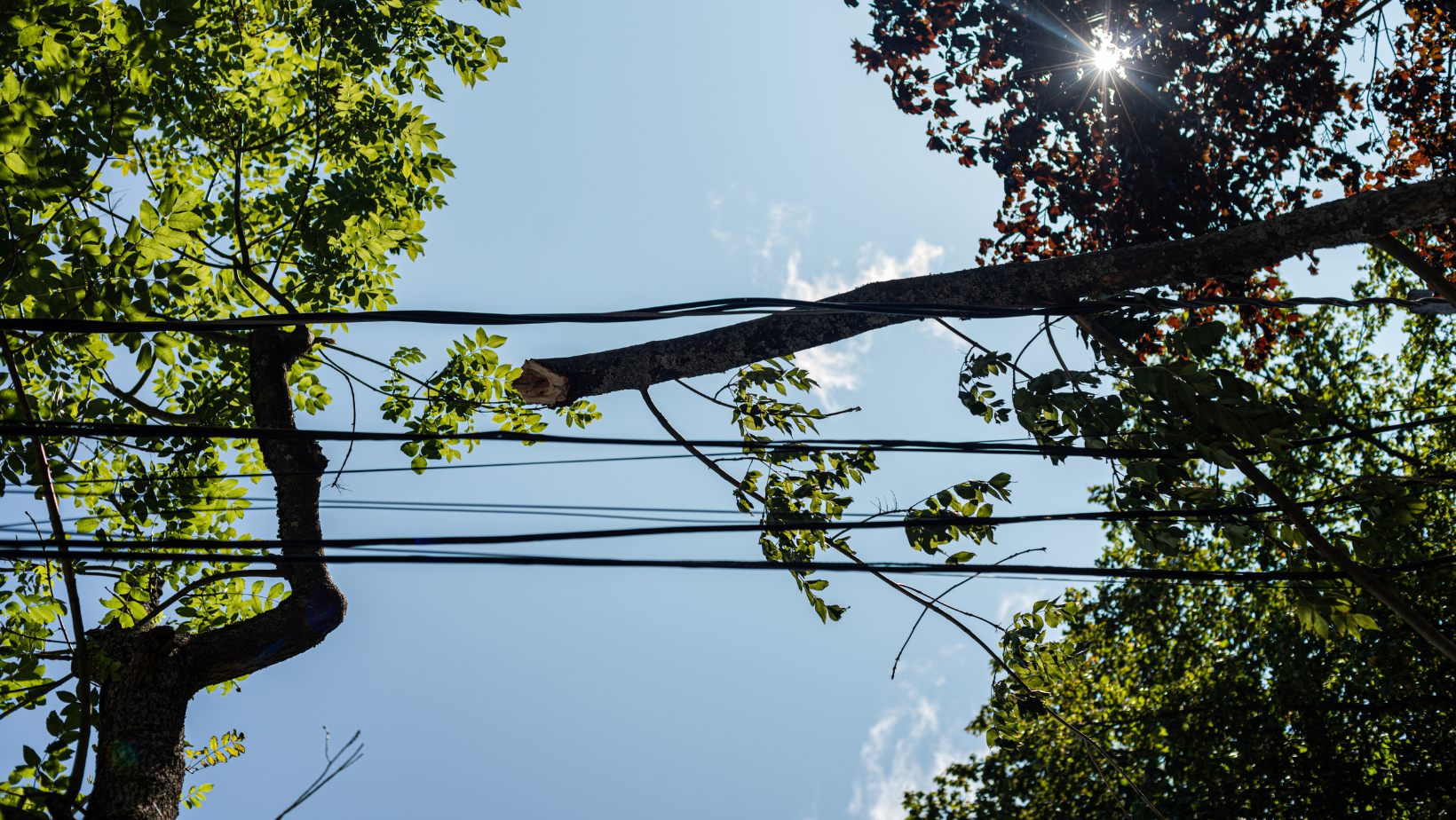
If a tree or limb is touching a power line, near a downed wire, or tangled with electrical equipment, stay away. Do not touch the tree, fence, vehicle, ladder, or anything else nearby. A power line can be energized even if it is not sparking, smoking, or making noise.
Safety first: FirstEnergy advises calling 911 if you see a downed power line and staying at least 30 feet away. Once the utility or emergency responders make the area safe, Joey Tree can help with the tree removal and cleanup process.
Helpful resource: FirstEnergy Downed Power Line Safety.
Tree Condition: Trimming vs. Complete Removal
Sometimes. A storm-damaged tree does not always need to come down. If the trunk is sound, the root system is stable, and only a few limbs are damaged, trimming may be enough to reduce risk and preserve the tree.
Removal becomes more likely when the tree is dead, hollow, badly cracked, leaning toward a structure, repeatedly dropping large limbs, or partially uprooted. A professional inspection can help determine whether trimming, monitoring, or removal is the safest option.
Trimming may be enough when:
- The tree is structurally sound
- Only a few limbs are damaged
- The trunk is not split or hollow
- The root system appears stable
- The tree is not leaning dangerously
Removal may be safer when:
- The trunk is cracked or split
- The tree is dead or mostly dead
- The root plate is lifting
- The tree is leaning toward a structure
- Large limbs are suspended over a roof or driveway
Learn more about tree trimming and pruning or request an inspection if you are not sure which option makes sense.
The On-Site Estimate Process
The most accurate way to estimate emergency tree removal cost is to inspect the tree and the property. Photos can help with the first conversation, but storm-damaged trees often need an on-site look because stability, access, weight, and nearby hazards are difficult to judge from one picture.
- Tree size, species, and condition
- Whether the tree is dead, split, leaning, or uprooted
- Where the tree fell or where it may fall
- Distance to homes, garages, fences, driveways, and utilities
- Equipment access and yard conditions
- Whether hauling, cleanup, or stump grinding is needed
- Whether the job is urgent or can be scheduled normally
If you are comparing this to a non-emergency project, visit our full guide to tree removal cost in Toledo.
Stump Grinding and Safe Digging Coordination
In an emergency, the first priority is making the area safe and removing the hazardous tree. Stump grinding can often be scheduled after the urgent removal is complete. Many homeowners choose stump grinding because it removes the leftover stump, reduces trip hazards, makes mowing easier, and prepares the area for grass or landscaping.
Before any digging, grinding, planting, or excavation work, it is smart to contact OHIO811 so underground utilities can be marked. OHIO811 says homeowners should notify at least 2 working days, but no more than 16 calendar days, before digging.
Helpful resource: OHIO811 Homeowner Safe Digging Guide.
Toledo Service Areas and Local Access
Joey Tree provides emergency tree removal, storm damage cleanup, tree removal, trimming, and stump grinding throughout the Greater Toledo area and nearby Northwest Ohio communities.
Sylvania
Perrysburg
Maumee
Oregon
Ottawa Hills
Holland
Waterville
Whitehouse
Monclova
Bowling Green
Northwest Ohio
Request an Estimate for Emergency Removal
If a tree is unstable, leaning, cracked, storm-damaged, or blocking access to your home, call before trying to clean it up yourself. Joey Tree can inspect the situation, explain what needs to happen, and help remove the hazard safely.
We can help with emergency tree removal in Toledo, professional tree removal in Toledo, cleanup, hauling, and stump grinding when needed.
Emergency Removal Cost FAQs
Why does emergency tree removal cost more than regular tree removal?
Can you quote emergency tree removal from photos?
Does homeowners insurance cover emergency tree removal?
What should I do if a tree is touching power lines?
Is stump grinding included with emergency tree removal?
When should I call Joey Tree instead of waiting?