Toledo Tree Removal Guide
Is That Tree a Storm Hazard?
Updated May 2026 for homeowners in Toledo and the surrounding Northwest Ohio area.
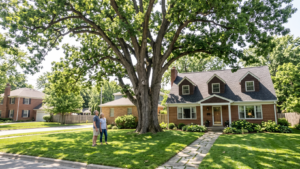
Spring and early summer are important times to look closely at the trees around your home. In the Toledo area, strong winds, heavy rain, saturated soil, and fast-moving storms can turn a weak tree into a serious property hazard. A tree that looked “fine” during winter can quickly become a problem once the canopy fills out with leaves and storm season picks up.
If you have a dead tree, a leaning tree, large limbs over your roof, or a tree that was damaged during recent storms, it may be time to talk with a professional about tree removal before it falls.
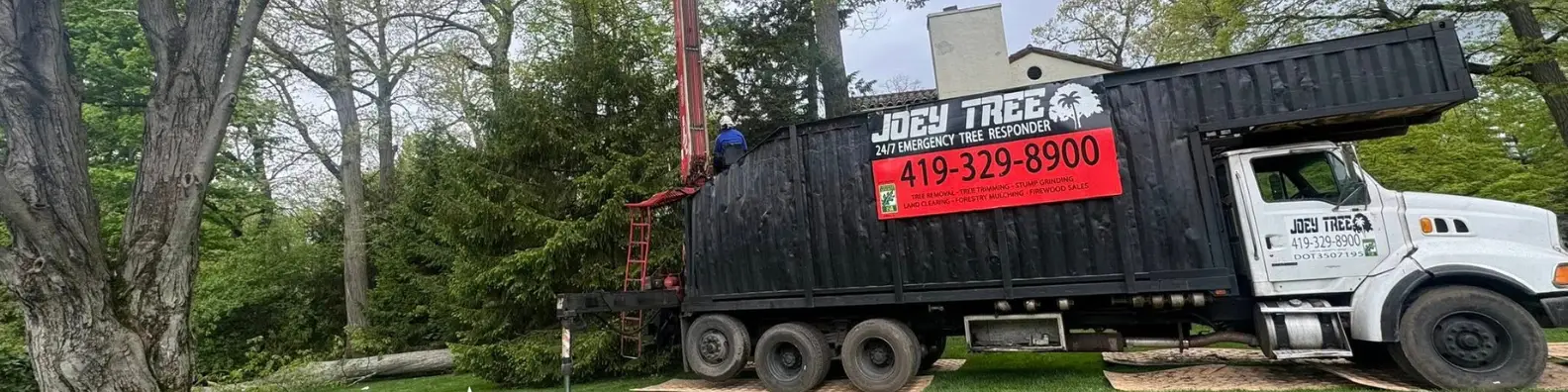
Need a dangerous tree looked at? Joey Tree provides professional tree removal in Toledo, OH and surrounding communities. Call 419-329-8900 or request a free estimate online.
Why May Is a Smart Time to Check Your Trees in Toledo
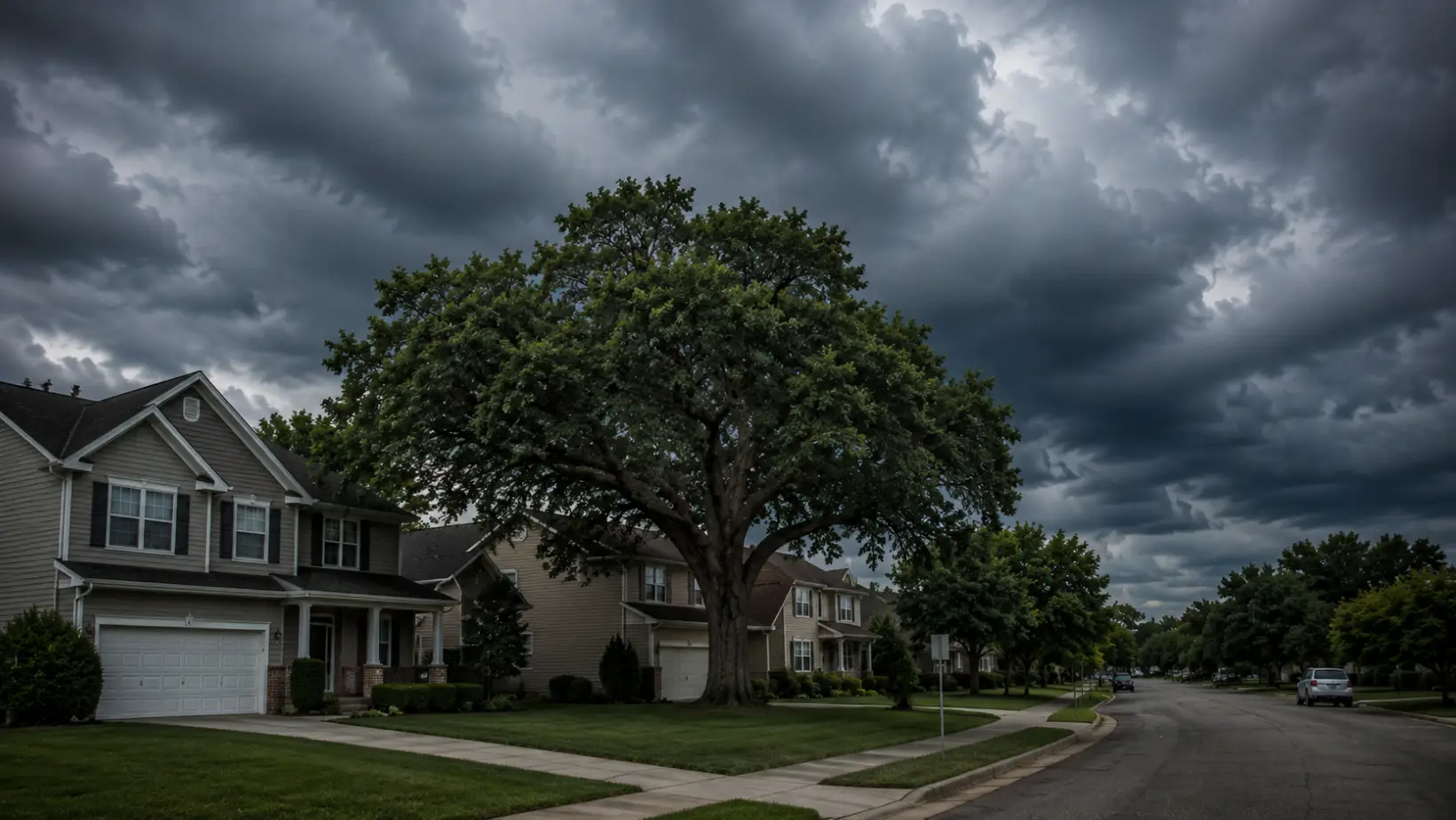
By May, Toledo trees are leafing out, soil moisture can change quickly, and storm systems can bring strong wind and heavy rain. That combination matters because a full canopy acts like a sail in high winds, while saturated ground can make weak root systems less stable.
This is especially important in older neighborhoods and mature properties throughout West Toledo, Point Place, the Old West End, Ottawa Hills, Sylvania, Maumee, Perrysburg, Oregon, Holland, Waterville, Whitehouse, Monclova, and Bowling Green. Mature shade trees add value and beauty, but they also need attention when they show signs of decline, decay, storm damage, or structural weakness.
The goal is not to remove every imperfect tree. The goal is to identify the trees that are most likely to fail and cause damage to your home, garage, driveway, fence, vehicles, sidewalks, or nearby utilities.
7 Warning Signs a Tree May Need to Be Removed
1. The Tree Is Dead or Mostly Dead
A dead tree is one of the clearest signs that removal may be necessary. Once a tree dies, the wood begins to weaken. Branches can snap, the trunk can become unstable, and the entire tree can fail during wind or rain.
Watch for these signs:
- No leaves during the growing season
- Brittle branches that break easily
- Large sections of missing bark
- Fungal growth around the trunk or base
- Dead limbs throughout the canopy
- Woodpecker damage or insect activity
If the tree is close to your house, garage, driveway, neighbor’s property, or a public sidewalk, it is worth having it inspected before the next storm.
2. The Tree Has Developed a New Lean
Not every leaning tree is an emergency. Some trees naturally grow at an angle. The concern is a lean that appears suddenly or gets worse after rain, wind, construction, excavation, or root disturbance.
Call for a professional tree assessment if you notice:
- Fresh soil heaving around the base
- Exposed or lifted roots
- A tree leaning toward your home or garage
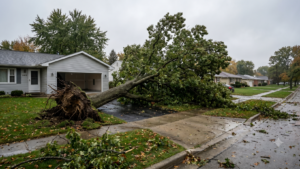
- A tree that shifted after a storm
- Cracks in the ground near the root zone
A suddenly leaning tree can become dangerous quickly. Do not wait for it to “settle back.” Trees do not usually correct themselves once the root system has started to fail.
3. The Trunk Is Split, Cracked, or Hollow
The trunk is the main support system of the tree. If the trunk has a major split, deep crack, open cavity, or hollow section, the tree may no longer have enough structural strength to stay standing safely.
- A vertical crack running down the trunk
- Two large stems splitting apart
- A hollow area at the base
- Soft or decaying wood
- Mushrooms or fungal growth near the trunk
- Large wounds that never closed properly
Some trunk damage can be managed with pruning or cabling, but severe decay or splitting often makes removal the safer choice, especially near structures.
4. Large Limbs Are Hanging Over Your Roof, Garage, Driveway, or Patio
Large overhanging limbs are one of the most common reasons Toledo homeowners call for tree service. A heavy limb over a roof, deck, garage, driveway, or outdoor seating area can cause major damage if it breaks during a storm.
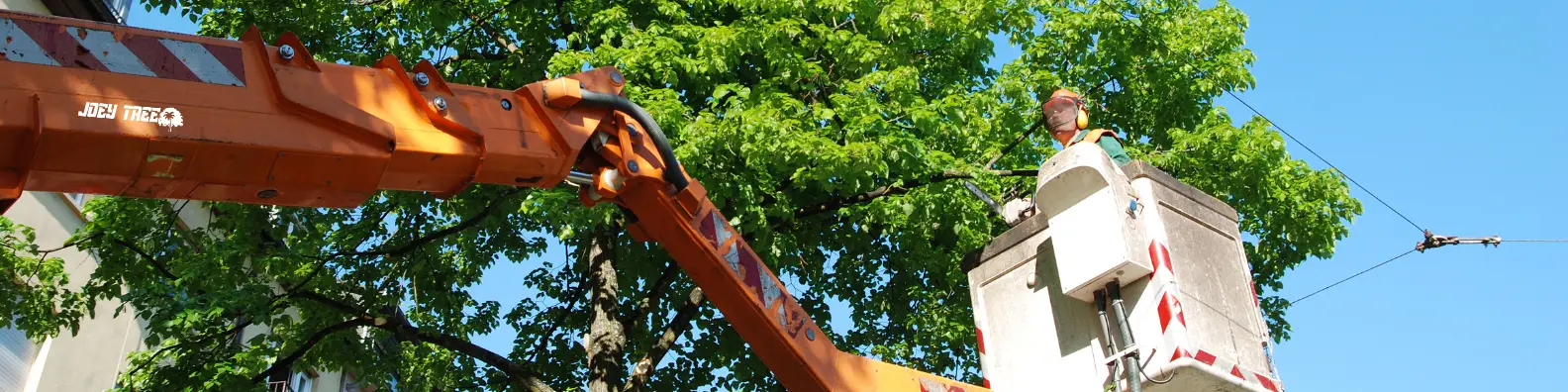
Tree trimming may solve the problem if the tree is otherwise healthy. However, removal may be the better option if the tree is dead, decayed, leaning, splitting, or repeatedly dropping limbs.
If you are not sure whether the tree needs trimming or removal, Joey Tree can inspect the situation and explain the safest option. Learn more about tree trimming and pruning.
5. The Tree Was Damaged in a Recent Storm
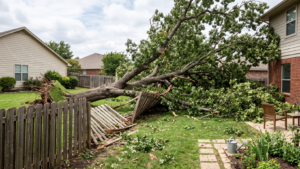
Storm damage is not always obvious from the ground. A tree may still be standing after a storm but have hidden cracks, broken limbs, twisted branches, or a weakened root system.
- Broken limbs hanging in the canopy
- Large branches split from the trunk
- A cracked main stem
- Fresh lean toward a structure
- Uprooted or partially lifted roots
- Branches resting on wires, roofs, or fences
If a tree is touching power lines, stay away and contact the utility company or emergency services first. Do not try to pull, cut, or move branches near wires. For urgent situations, Joey Tree provides emergency storm damage tree service in Toledo.
6. Roots Are Damaging a Sidewalk, Driveway, Foundation, or Sewer Line
Tree roots are important for stability, but they can also create problems when a tree is planted too close to hard surfaces, older infrastructure, or a home. In Toledo neighborhoods with mature trees and older sidewalks, root conflicts are common.
- Sidewalk slabs lifting or cracking
- Driveway damage near the root zone
- Roots growing against a foundation
- Repeated sewer or drain issues near a large tree
- Soil heaving around the trunk
Root issues do not always mean the tree must be removed. Sometimes pruning, sidewalk repair, or root-zone management can help. But if the tree is unstable, damaging important infrastructure, or planted in the wrong location, removal may be the most practical long-term solution.
7. The Tree Is in a Tight or High-Risk Location
Some trees become risky because of where they are growing. A tree that might be manageable in an open field can become a serious hazard when it is wedged between a house, garage, fence, driveway, utility line, or neighbor’s property.
- Trees close to homes or garages
- Trees leaning over driveways or parking areas
- Trees near power lines
- Trees growing over patios or play areas
- Trees near commercial buildings or customer parking lots
- Trees in tight backyards with limited access
These removals often require the right equipment, planning, rigging, and cleanup process. Joey Tree uses professional equipment for difficult removals, including large, hazardous, and tight-access tree removal projects.
Private Tree or Toledo Street Tree? Know the Difference
Before removing a tree, it is important to know whether it is a private-property tree or a public right-of-way street tree.
In many cases, a tree fully inside your yard is your responsibility. But trees located in the tree lawn, public right-of-way, or near the street may fall under City of Toledo rules. If you are unsure, do not remove it yourself without checking first.
The City of Toledo provides information about public street trees and says residents can report street-tree maintenance concerns to Engage Toledo. You can view the City’s street tree information here: City of Toledo Street Trees FAQ.
If you are not sure whether your tree is private or public, Joey Tree can help you understand what to check during your estimate.
Can Trimming Save the Tree Instead?
Sometimes, yes. Tree removal is not always the first answer. If the tree is healthy but has overgrown, dead, or poorly placed limbs, professional pruning may reduce risk and extend the life of the tree.
Trimming may be enough when:
- The trunk is structurally sound
- The root system appears stable
- Only a few limbs are damaged or overextended
- The tree is not leaning dangerously
- There is no major decay at the base
Removal may be better when:
- The tree is dead or mostly dead
- The trunk is split or severely decayed
- The tree is leaning toward a structure
- Large limbs keep failing
- The root system is compromised
- The tree is too close to a home, garage, or utility hazard
A professional inspection can help you avoid removing a tree unnecessarily while still protecting your property from avoidable damage.
What Happens During a Tree Removal Estimate?
When Joey Tree visits your property, the goal is to understand the tree, the risk, and the safest way to complete the job. A tree removal estimate may include looking at:
- Tree health and structural condition
- Lean, trunk cracks, decay, and root stability
- Proximity to your home, garage, fence, driveway, or utilities
- Access for equipment and cleanup
- Whether trimming, removal, stump grinding, or another service is best
- Whether the job is urgent or can be scheduled normally
You will get clear guidance, practical options, and an explanation of what needs to happen next.
Tree Removal Service Areas Around Toledo
Joey Tree provides tree removal, trimming, stump removal, and storm damage service throughout the Greater Toledo area, including:
When to Call Right Away
Some tree issues should not wait. Call for help right away if:
- A tree is leaning toward your home or garage
- A tree or limb is on your roof
- Branches are hanging over a driveway or entrance
- The trunk is split after a storm
- The root plate is lifting out of the ground
- A tree is blocking access to your property
- A tree is touching or near utility lines
If power lines are involved, stay back and contact the utility company or emergency services first. Once the area is safe, Joey Tree can help with the removal and cleanup process.
Request a Tree Removal Estimate in Toledo
A dangerous tree rarely gets safer on its own. If you are worried about a dead tree, leaning tree, storm-damaged tree, or large limbs over your home, now is the time to have it looked at.
Joey Tree provides safe, professional tree removal throughout Toledo and Northwest Ohio. We can inspect the tree, explain your options, and remove it with the right equipment and cleanup plan.