Tree Roots Damaging Sidewalks in Toledo?
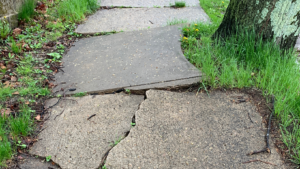
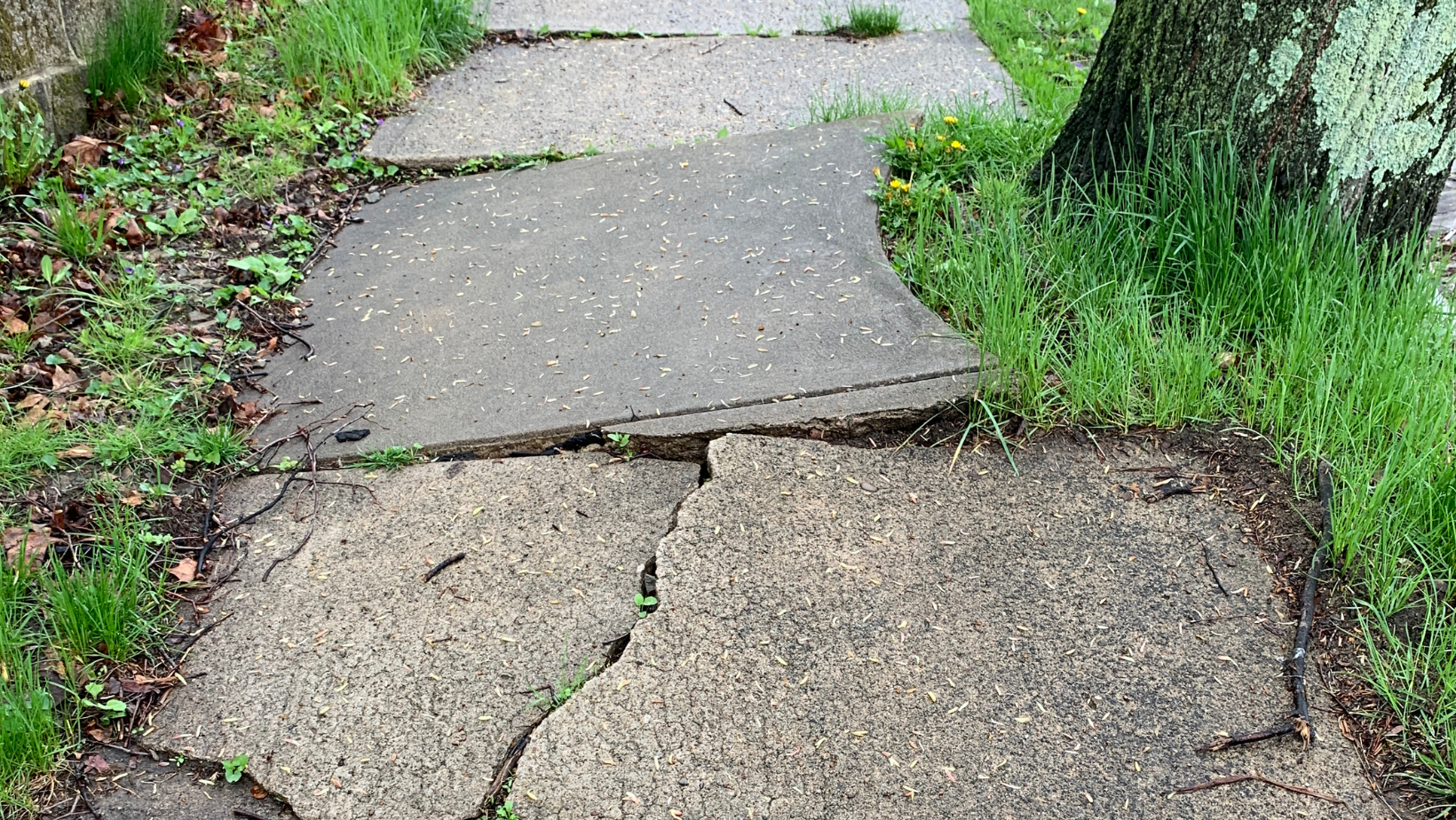
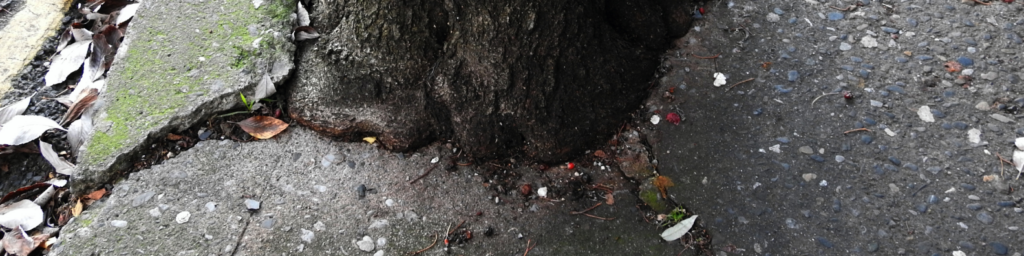
If you live in Toledo, signs of tree root issues are obvious: sidewalk panels lifted, driveways cracked near mature trees, and sewer lines backing up unexpectedly.
Tree roots aren’t aggressive or destructive on purpose. They don’t “hunt” for concrete or sewer pipes. They grow where conditions are best: moisture, oxygen, and available space.
In Toledo, conditions often occur under sidewalks and driveways where soil stays moist and compacted, especially near older sewer lines with existing cracks or joints. This is common in neighborhoods like Old West End, South Toledo, Westgate, Ottawa Hills, Perrysburg, Maumee, and Sylvania, where mature trees, aging infrastructure, and tight planting spaces are common. Northwest Ohio’s freeze–thaw cycles can turn small root issues into ongoing property problems.
Roots thicken slowly, and concrete doesn’t flex. Toledo’s freeze–thaw cycles cause soil to expand and contract yearly. When combined, even small roots can lift sidewalk panels, creating trip hazards.
Also, so that you know, property owners are typically responsible for sidewalk repairs along their frontage. That means you’re not just dealing with a tree problem; you’re also dealing with a liability and repair decision.
When Sidewalk Repair Alone Might Be Enough
Not every lifted sidewalk means you need to cut roots or remove a tree.
If the lift is minor and limited to one panel, the best solution may be to adjust or replace the concrete without touching the major roots. In some cases, a slight redesign of the walkway line or grade can avoid the root zone entirely.
This approach works best when the tree is healthy, stable, and not pushing additional panels upward each season.
Root Pruning
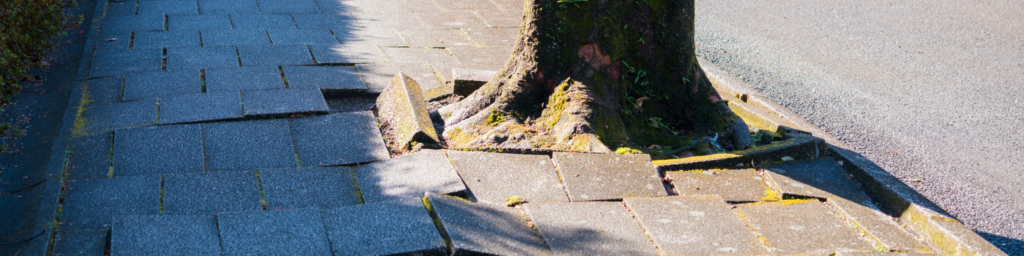
Roots close to the trunk play a major role in keeping a tree upright. Cutting the wrong root in the wrong place can reduce stability, especially during high winds or saturated soil conditions, which Toledo sees regularly during storm season.
Root pruning is most appropriate when:
- The problem root is far enough from the trunk
- The tree is healthy and structurally sound
- The pruning won’t remove a significant portion of the tree’s support system
When Tree Removal Becomes the Smarter Long-Term Choice
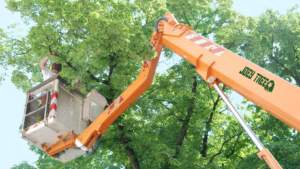
If multiple sidewalk sections are lifting, repairs keep recurring, or the roots involved are large structural roots near the trunk, removal may be the safest and most cost-effective option. This is especially true when the tree is already declining or was planted in a space that never allowed for mature growth.
Driveway damage caused by roots usually shows up in one of two ways, and the difference matters. Cracking can come from age, settling, or base failure, with roots sometimes contributing. If cracks radiate toward a nearby tree and worsen over time, roots may be part of the issue, but they’re rarely the only cause.
Heaving, on the other hand, is more likely to be root-driven. When a section of driveway lifts and forms a noticeable hump, a thickening root beneath is often the cause.
Because driveways are expensive to replace, it’s important to determine whether fixing the concrete alone will actually solve the problem or if the underlying issue will simply push the new driveway up again in a few years.
Sewer Line Backups
Few things cause more stress than a sewer backup, and many Toledo homeowners are told the same thing: “You’ve got roots in your line.”
What’s important to understand is that tree roots rarely break a solid, intact pipe on their own. In most cases, roots enter through existing cracks, offset joints, or aging connections. Once they find moisture, they expand and block the passage.
That means a sewer root problem is often a pipe problem first, with a tree nearby making it worse.
Why a Camera Inspection Matters
Before making any decision about cutting roots or removing a tree, a sewer camera inspection can tell you:
- Exactly where the roots are entering
- Whether the pipe is cracked, offset, or collapsed
- If the issue is isolated or part of a larger failure
Cutting Roots vs. Fixing the Pipe vs. Removal
Each option has a place, but they’re not interchangeable.
Cutting roots inside the pipe can temporarily restore flow, but if the pipe defect remains, the roots often return. Pipe repair or lining addresses the real entry point and is usually the most durable fix.
Removing the tree may reduce future root pressure, but it does not automatically repair a damaged pipe. In many cases, the best solution is a coordinated plan that addresses both the pipe condition and the surrounding trees.
A Safety Reminder Before Any Root Work
Before digging, trenching, or cutting roots in Toledo, call 811 to have underground utilities marked. Gas, electric, and communication lines can run close to sidewalks, driveways, and tree roots, especially in older neighborhoods.
Skipping this step can turn a routine project into an emergency.
The Biggest Mistake We See Homeowners Make
Cutting roots without understanding tree stability can create serious safety risks. Replacing concrete without fixing the cause often leads to the same damage again. Removing a tree without confirming a sewer issue can leave you with the backup problem, just without the tree.
The real goal isn’t to patch today’s damage. It’s to prevent the problem from recurring after the next storm or freeze–thaw cycle.
If the issue is minor and the tree is healthy, the least invasive option is usually best. But if major roots are involved, the damage keeps spreading, or sewer lines are part of the problem, guessing can get expensive fast.
Schedule a free on-site evaluation to find the safest, most cost-effective solution before the damage worsens.