Tree Too Close to Your House in Toledo? When Trimming Is Enough and When Removal Is Safer
In the Toledo area, this is one of the most common tree questions homeowners ask too late.
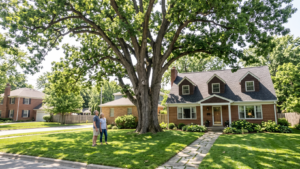
A maple that once looked perfect in the front yard is now hanging over the roof. A mature oak is crowding the driveway. Roots are pushing the walk. Branches scrape the gutters every time the wind comes off the lake. In neighborhoods like Old Orchard, Ottawa Hills, Westmoreland, Beverly, and the blocks around Secor and Bancroft, it happens all the time because many of these trees were planted decades ago, when nobody was thinking about how wide the canopy or root system would get 20 or 30 years later.
The good news is that not every tree close to a house has to come down. Sometimes a smart trim is enough. Sometimes root management or monitoring makes sense. And sometimes removal is the safest option before the next windstorm, ice event, or saturated spring soil makes the decision for you.
Quick answer: If a tree is dropping heavy limbs, touching the roof, crowding a garage, lifting concrete, leaning toward the house, or showing signs of decay, it deserves a professional inspection. In many cases, trimming is enough. In other cases, removal is safer because the tree has outgrown the site or developed structural problems that pruning cannot fix.
Why This Problem Shows Up So Often in Toledo-Area Yards
The Toledo area has a perfect mix of conditions for “tree too close to the house” problems. Many homes sit on older lots with mature trees planted close to the structure for shade. Over time, canopies spread farther than expected, roots expand into driveways and sidewalks, and repeated weather stress weakens limbs.
Add in Northwest Ohio weather, wet springs, heavy snow, lake-effect wind, summer storms, and saturated clay soils, and even a tree that has “always been there” can become a very different risk than it was five years ago.
We see this constantly in older neighborhoods and established suburbs where large silver maples, ash, cottonwoods, Bradford pears, and mature oaks now sit closer to roofs, garages, fences, and walkways than anyone would choose if they were planting today.
When Trimming Is Usually Enough
A tree close to your house does not automatically mean removal. Many trees can stay in place safely for years if the structure is sound and the canopy is managed correctly.
The trunk is sound and stable. There is no major lean, decay pocket, root plate movement, or large structural crack.
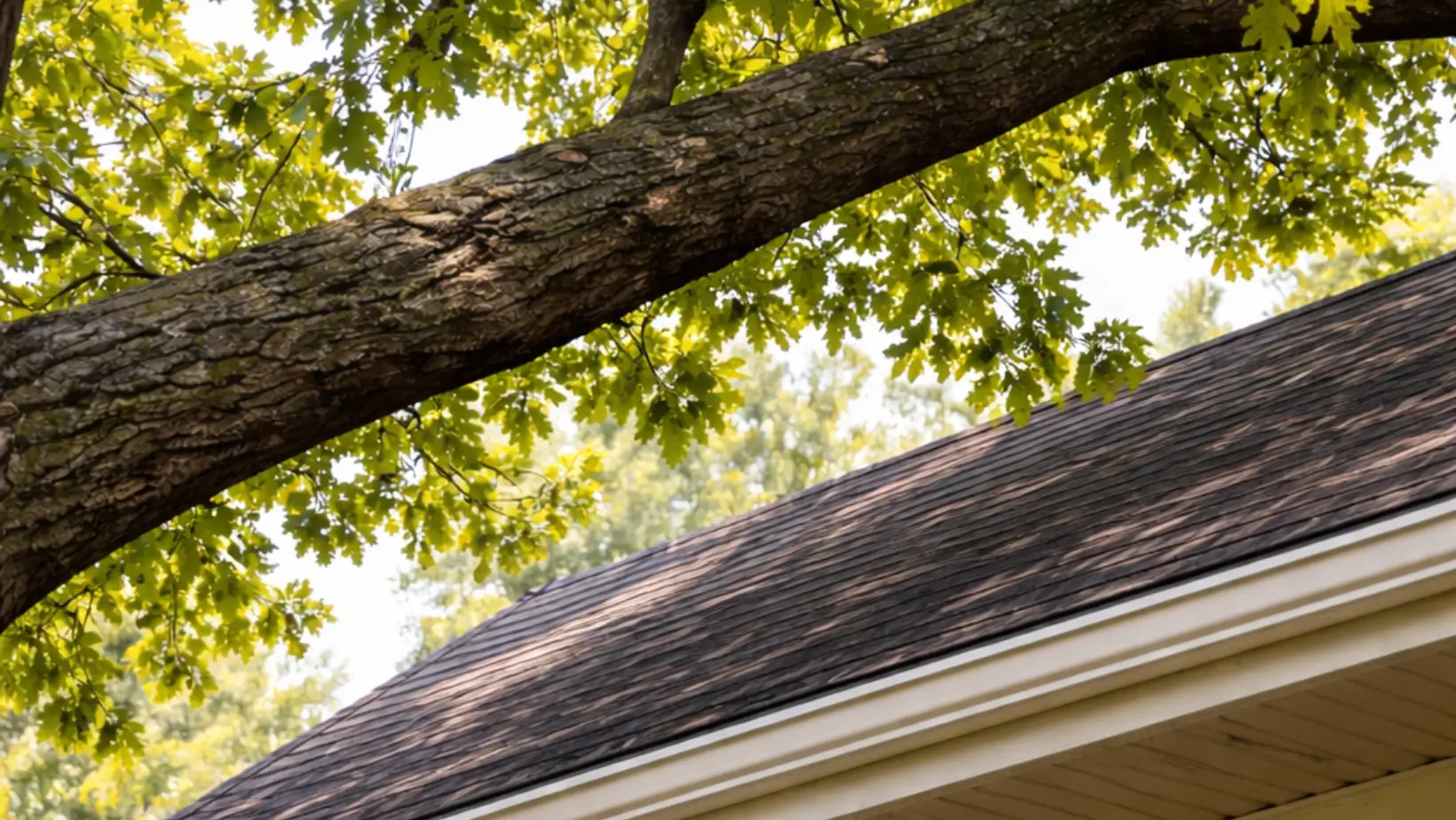
The main issue is branch clearance. Limbs are over the roof, garage, driveway, or sidewalk, but the tree itself is otherwise healthy.
The species responds well to pruning. Some trees tolerate corrective trimming much better than others.
The goal is risk reduction, not size denial. A good trim reduces weight, improves clearance, and removes deadwood; it does not turn a large mature tree into a small one forever.
This is where professional tree trimming and pruning can buy you time, improve safety, and preserve a tree that still belongs on the property.
When Removal Is the Safer Call
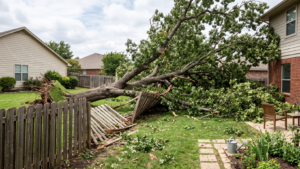
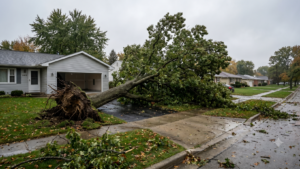
Sometimes a tree is too large, too compromised, or too poorly located to be kept safely. In those cases, removal is not about overreacting. It is about preventing the kind of damage that occurs in the middle of a storm, at night, or when the ground is saturated, and the tree finally gives way.
The tree is leaning toward the house or garage. Especially if the lean is new, increasing, or tied to cracked soil or lifted roots.
There is visible decay, fungus, or a hollow trunk. A big canopy attached to a compromised base is a bad combination in Toledo’s wind and ice.
The root zone is causing ongoing structural or hardscape issues. Repeated driveway lifts, sidewalk displacement, or major conflicts near patios and retaining edges can be a sign that the tree has outgrown the site.
The species is brittle or declining. This often occurs with aging ash, silver maples, cottonwoods, and ornamental pears under stress.
The tree would require repeated aggressive trimming to keep it off the structure. If you have to over-prune it every cycle just to maintain clearance, removal is often the more honest long-term solution.
When that is the case, professional tree removal is often the safest and most cost-effective path forward.
What About Roots, Driveways, and Foundations?
Homeowners often assume any tree close to a house is automatically damaging the foundation. That is not always true. In many cases, the more obvious issue is the driveway, sidewalk, patio edge, or sewer lateral, especially on older Toledo properties with mature roots and hardscape installed after the tree was already established.
If roots are lifting concrete, cracking a walk, or changing the grade near the house, the answer is not always “cut roots and hope.” Root pruning can reduce stability if done in the wrong place, especially in wet soil and high-wind conditions. Sometimes the best answer is to preserve the tree and change the hardscape. Sometimes the best answer is staged management. Sometimes removal really is the safer move.
If that is your main concern, this article pairs well with your existing post on tree roots damaging driveways and sidewalks.
What Joey Tree Looks At During an Inspection
When we inspect a tree that feels too close to a house, we are not just looking at branch clearance. We look at the whole risk picture.
- Species and growth habit
- Current canopy spread over the roof, garage, gutters, or driveway
- Visible defects in the trunk, unions, or scaffold limbs
- Root flare condition, soil movement, and signs of instability
- Past storm damage or old topping wounds
- Clearance to power lines, fences, and neighboring property
- Whether trimming would solve the problem or delay it temporarily
- Access for safe rigging, bucket work, or crane-assisted removal if needed
That is also where arborist consulting can be especially useful if the tree is large, historic, or expensive to remove, and you want a confident decision before doing anything major.
How We Handle Tight-Space Removals Near Homes in the Toledo Area
One reason homeowners wait too long is fear of yard damage. That is understandable. In neighborhoods with established landscaping, narrow drives, old garages, and backyard fences, a bad removal can create more damage than the tree itself.
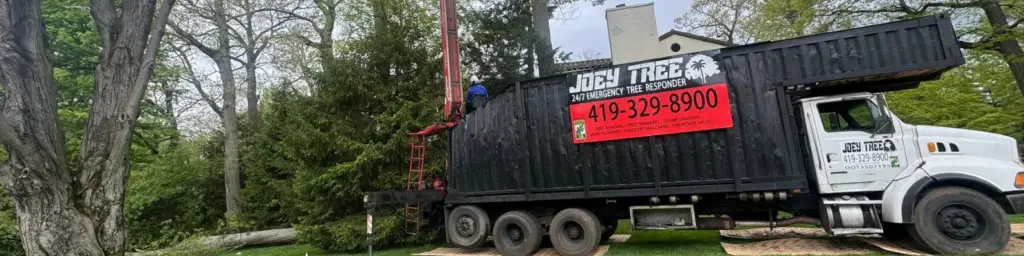
Joey Tree handles removals near structures using the right combination of planning, rigging, bucket access, grapple saw work, and crane-assisted removal when needed. The goal is controlled piece-by-piece work, not guessing, rushing, or hoping a backyard has more room than it actually does.
If the tree is already storm-damaged or becoming urgent, we can also help through emergency tree removal in Toledo.
Common Toledo-Area Situations Where This Comes Up
Old Orchard and Westmoreland: Mature maples and oaks with long lateral limbs now over roofs and garages.
Ottawa Hills and central Sylvania: Large established canopies on lots where homes, fences, and landscaping leave very little room for error.
Maumee and Perrysburg: Trees near driveways, additions, patios, and rear lot lines where repeated trimming may no longer be enough.
West Toledo, Holland, and Springfield Township: Aging ash and fast-growing species near homes and service lines, where decline can accelerate quickly.
The Best Time to Ask Is Before the Next Storm
If you keep looking at the same tree every time the wind picks up, that is usually a sign it is time to have someone take a real look.
Sometimes the answer is a trim. Sometimes it is monitoring. Sometimes it is removal before you end up with a cracked roof, a blocked driveway, a lifted walkway, or an emergency call after dark. The important part is getting a clear answer before the weather decides for you.
Need an Honest Opinion on a Tree Near Your House?
If a tree is crowding your roof, driveway, garage, or fence, Joey Tree can assess the risk and advise you on whether trimming, monitoring, or removal is the best next step.