Big Oak Over Your Roof Or Driveway?
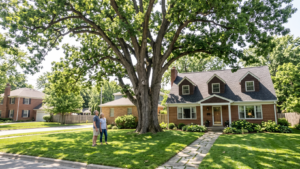
If you have a large oak tree reaching over your roof, driveway, or garage, winter has a way of making you suddenly notice it. A branch that felt harmless all summer can start to feel a lot heavier once snow piles up, ice forms, and wind starts pushing it around.
Here in and around Toledo, January is when we get a lot of calls that start the same way:
“Nothing’s ever happened before… but this looks different now.”
This article is about two very common winter situations:
- When you need to trim an oak tree near your house to create safer clearance over roofs and driveways
- What to do if you suddenly have a hanging or cracked oak limb after snow, ice, or wind
Why Winter Makes Oak Branches Feel Riskier
Oak trees are strong, but they’re also heavy. In winter, that weight increases fast.
Snow adds load. Ice locks branches into rigid positions. Wind hits harder when the canopy is bare. Freeze-and-thaw cycles can turn small cracks into real breaks almost overnight.
A branch hanging over your roof or driveway for years may suddenly dip lower, twist slightly, or rub in places it never did before. Winter often exposes these weak spots. When such weak points are above valuable items such as a roof, a vehicle, or an entrance, maintaining proper clearance becomes important.
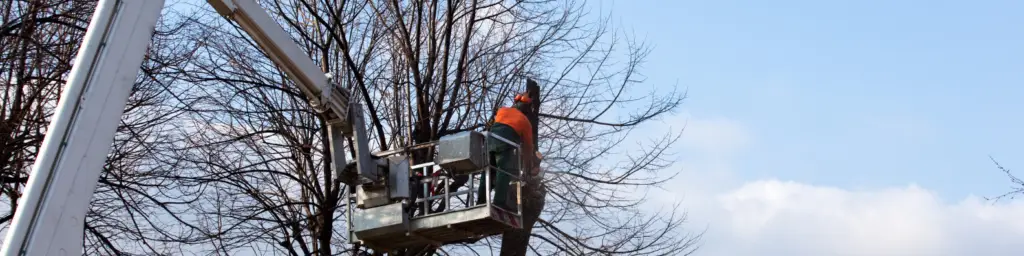
Clearance Pruning Benefits
Good clearance pruning removes or reduces specific limbs to create breathing room without altering the tree’s shape. The goal is to make the fewest cuts that effectively mitigate risk.
In Toledo neighborhoods, clearance pruning usually focuses on:
- Tree branches over the roof that rub shingles or dump debris into valleys
- Limbs hanging over driveways that force you to duck, swerve, or worry during snowstorms
- Branches brushing gutters, garage roofs, or second-story siding
- Low limbs over sidewalks or front walkways that become slippery hazards in winter
- Overhangs that block exterior lights or security cameras
Signs Your Oak Is Too Close For Comfort
Homeowners typically don’t reach out due to a single, dramatic incident. Instead, they often notice subtle signals. For example, you might see branches sway nearer to the roof during wind than before, or you might hear rubbing noises that you’ve never heard previously.
Perhaps you frequently remove sticks and acorns from your gutters or see dents in the snow where branches hang over the driveway. Another typical sign is persistent winter debris. If you notice twigs, bark, or small branches in the same spot after each storm, it indicates that the tree is signaling something.
None of these automatically mean the tree is dangerous, but they are signs that clearance pruning should be evaluated before winter weather decides for you.
Why “Just Trim A Little Off The Roof” Can Backfire
Cutting only the smallest branches near the house can leave one heavy limb carrying all the weight. Removing too much from one side can throw the tree off balance. Making blunt or random cuts can lead to weak regrowth that breaks more easily later.
Oak trees respond best to thoughtful, strategic cuts rather than quick fixes. Proper clearance pruning looks at how weight is distributed and how the branch will behave under snow, ice, and wind.
Done correctly, it reduces risk now and prevents repeat problems next winter.
What To Do When A Branch Cracks Or Starts Hanging
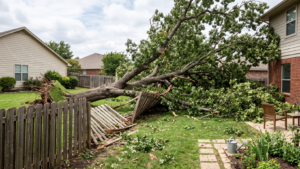
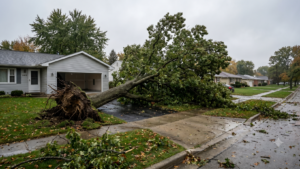
If you encounter a branch that suddenly cracks, splits, or drops lower after a storm, the most important step is to move carefully. A hanging limb can break unexpectedly, particularly in cold weather when the wood becomes brittle.
Keep people and vehicles away from the area below. Don’t park under it “just for tonight.” Prevent kids and pets from playing near it.
Next, take a look from the ground. You’re not trying to diagnose the whole tree. You’re just asking: If this comes down, what will it hit?
If the answer is your roof, driveway, sidewalk, or garage, it’s a safety issue, not a cosmetic one.
If any part of the limb is touching or near power lines, stop there. Do not approach it. That’s a utility and professional situation only.
What Not To Do With A Hanging Oak Limb
Winter is the season when DIY tree work is most prone to problems. Steer clear of ladders, as ice, snow, and uneven ground significantly increase their danger. Also, avoid pulling branches down with ropes or vehicles, as this can alter the fall’s direction and cause more damage.
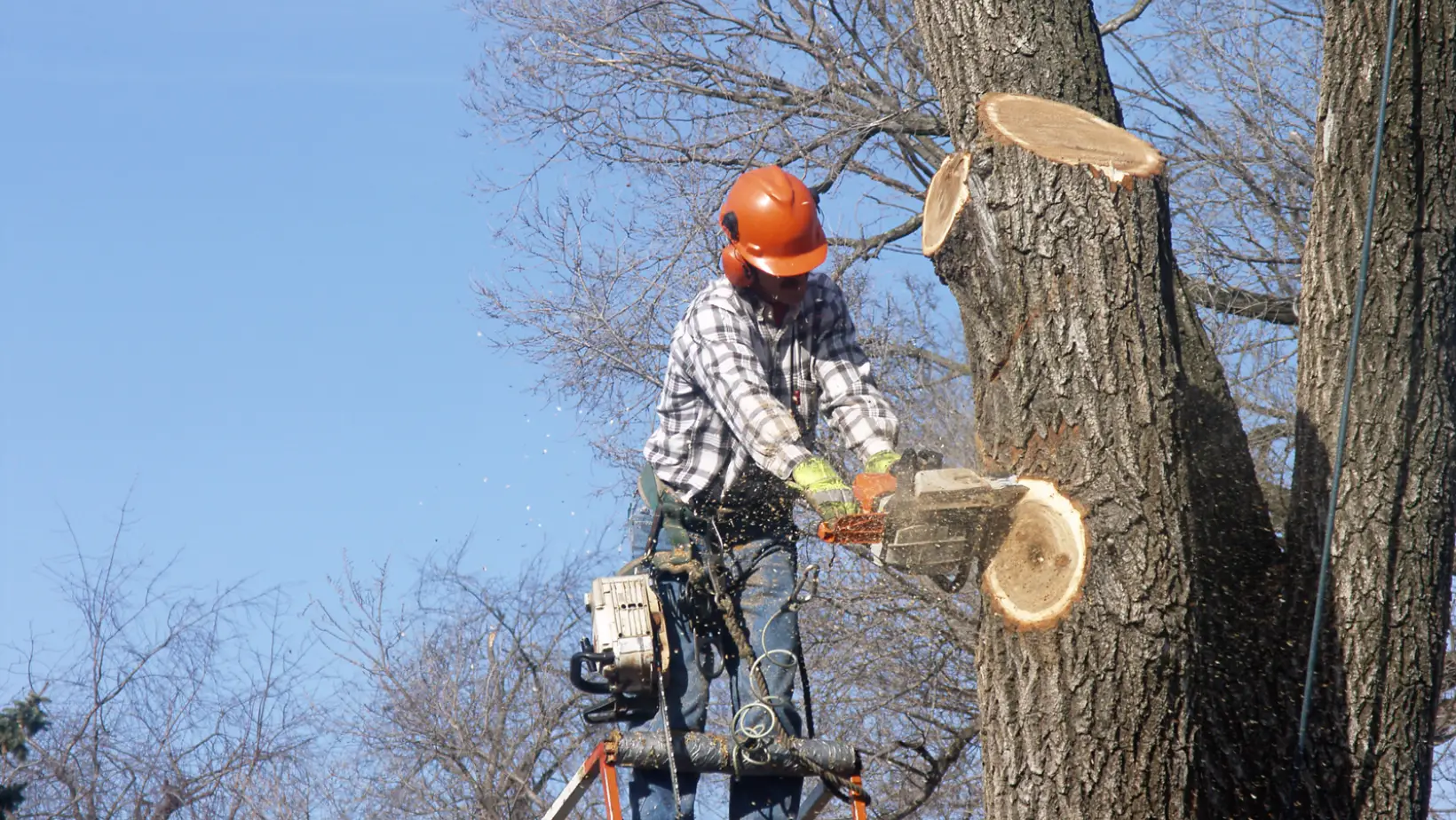
Avoid overhead chainsaw cuts because cracked limbs are under tension, and releasing that stress can cause rapid, unpredictable movement. Instead of quickly making a “stub cut” just to detach the branch from the roof, ensure the cut is done properly. Poorly made cuts can tear bark and result in larger wounds than the initial issue.
If your instinct says, “This feels sketchy,” that’s usually the correct read.
Why Winter Is A Good Time To Fix Clearance Issues
Winters in Toledo are usually for sledding, skating down at The Ribbon, or yelling ‘Go Fish!’ at the Walleyes game. Rarely is tree trimming on anyone’s mind, unless an emergency happens.
Winter might seem counterintuitive, but it’s often the ideal time to address oak clearance issues. Without leaves, the tree’s structure becomes clearer, allowing crews to accurately identify problematic limbs rather than guessing. Snow and ice highlight areas where weight accumulates and movement occurs, aiding in better assessment.
Taking care of clearance now can really help prevent emergencies later on, especially during big snowfalls or late-winter windstorms. Many emergency calls happen because clearance issues weren’t caught early enough, so it’s always better to address them while you can.
Oaks Near Homes
If your oak is close to your house, garage, or driveway, the best plan is simple and low-pressure.
Have a professional, like Joey Tree, inspect the tree, identify clearance requirements, and recommend only the cuts that actually reduce risk.
Often, one site visit is enough to determine whether you’re dealing with routine clearance pruning, deadwood removal, or a true hazard that needs immediate attention.
Send A Photo And Get A Straight Answer
If something about your oak tree looks different after a storm, such as lower branches, a new crack, or limbs closer to your roof or driveway, you don’t have to guess or wait for it to get worse. A quick look can often tell us whether it’s a real safety concern or something that can be planned and handled calmly.
Send us a few clear photos, and we’ll point you in the right direction. A full view of the tree, a close-up of the problem area, and an image showing what the branch could hit are usually enough for us to give you honest guidance on next steps.
If it’s a hazard, we’ll tell you right away what needs to be done to keep your home and family safe. If it’s not urgent, we’ll help you schedule the right clearance work at the right time. Either way, a small amount of attention now can prevent major damage, stress, and emergency calls later.
Just give us a call or send us a message, and we’ll take it from there!